Are you looking for the importance of local SEO, or want to learn about it? You are in the right place. Local SEO is a factor that depends on your keywords, volume, hierarchy, and focus on your readers. Local SEO matters a lot in your website’s journey and in Google ranking. Whenever you want to rank your SEO blogs, articles, and keywords on Google, you need local SEO.
Without being delayed in this article, we will explore why local SEO is important, what the main factors of it are, how to do local SEO, and what tips and tricks you can use for better ranking. Let’s explore local SEO services:
What is Local SEO?
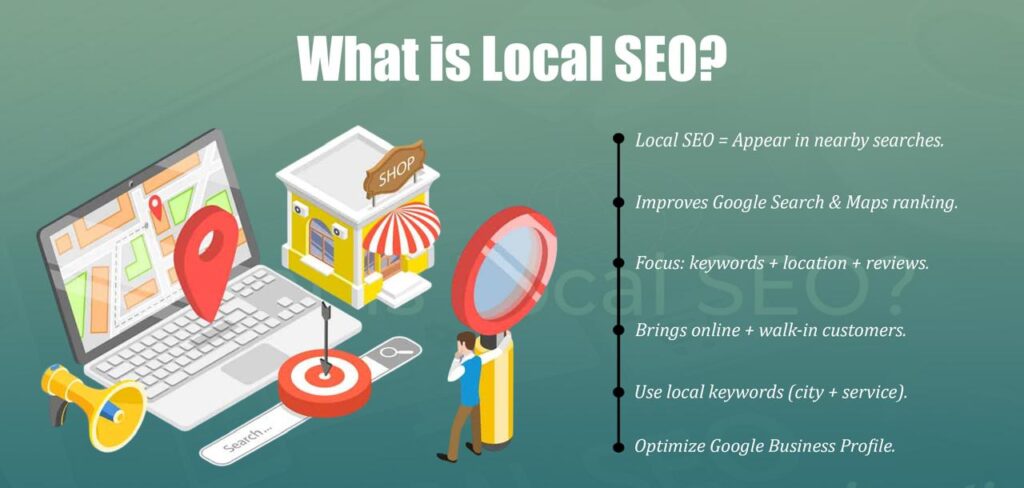
Local SEO, or Local search engine optimization, is the process of making your business show up in online searches. All the online searches are connected to a specific location. In simple words, it means that you are helping your business appear in the online field when people nearby or far away search for your services. It’s not only for your online services, but it also provides the opportunity to sell your products online.

For example, if someone types “hair salon near me” or “best dentist in Dallas”, Google will work in the back end and show the results that are close to their location in a sequence. Localize your help, and your business will be one of those top results that Google shows. This process is very important for both Google Research and Google Maps. If you are doing it correctly locally, you can replace your business ranking from 10th to the top of the list. If your SEO is strong, then your business will be in the “local pack”.
Local pack is the group of three businesses that shows under the map on the search results. If your website is in this pack, it means that it will give you high visibility and more chances of customers on your way. Local SEO is different from general SEO because it doesn’t only look at your website. It also focuses on your business location, customer reviews, and how relevant your services are to people’s queries.
If your keywords match the people who ask questions or information, then there is a high chance of getting ranked in the top 5 on Google. Businesses like restaurants, mechanics, plumbers, dentists, local shops, and others can easily take advantage of the online market because they depend heavily on the people who live in the nearby area.
Importance of Local SEO
Local SEO helps everyone’s business in the online presence, and people can get more profit by selling their products and services online. Many people today search online before visiting the store or hiring a service. It becomes a habit to check online first before deciding to go anywhere. This habit is beneficial to all those people who work on online websites. It gives an edge to connect more people to sell their services.
If someone is looking for “Barber near me,” and on the other hand, you are the person who is running a barber shop in that area. Because of your online presence with correct SEO, the person who is looking for a barber can easily contact you from Google search results (if you’re at the top of the list).
Google handles billions of local searches every month. When people look for “coffee shop near me” or “best law firm in Chicago”, they will definitely visit one of the top results right away. If your business does not have an online presence, then it means that you miss out on valuable opportunities.
Another reason why it’s valuable is that when people see your business in the local pack with good reviews, they feel confident about their decision that you are reliable. This can increase not only your website but also the physical location visits of random people.
How Local SEO Works?
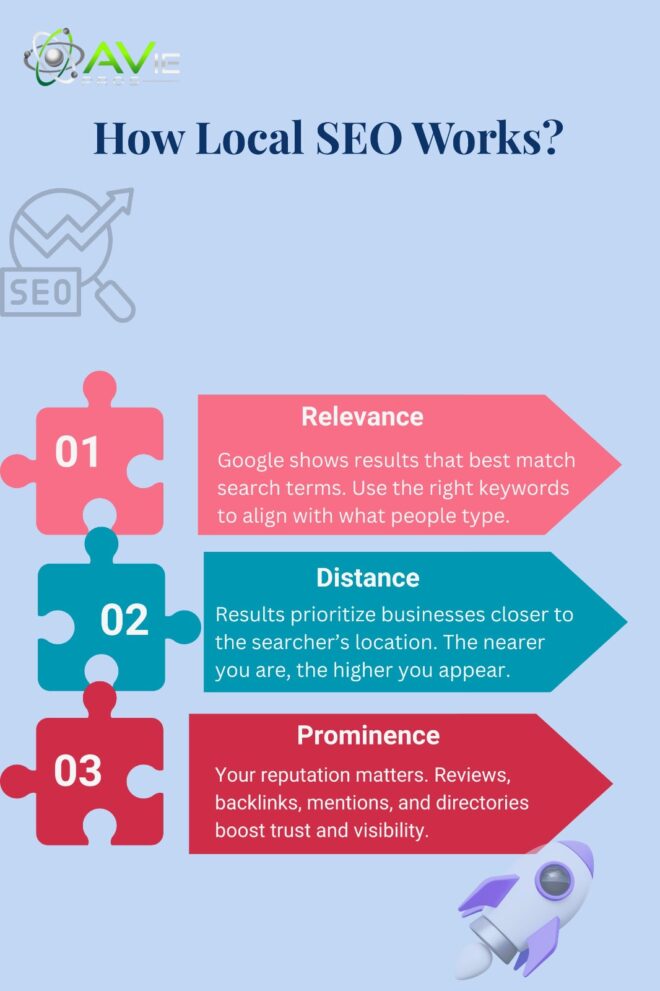
Local SEO works by showing Google results that are relevant or close to the queries of the person who searches. Google works on three main things to decide which businesses appear in the local results. Here are the factors below:
1. Relevance
This is one of the most important factors that matters a lot. This means that how closely your business matches what someone is searching for. It should be a word similar to what people type in the search bar. For example, if a person types “Italian restaurant in London,” Google will show all the Italian restaurants instead of burger places.
You can easily manage your keywords from various websites that tell the volume of keywords. The volume of a Keyword is actually what people type. It can help you match your headings with those specific keywords for your ranking.
2. Distance
Google considers how far your business is from the person who is searching. Most people ask for nearby services. For example, if two people have online presence and are working in a specific area. Google will compile the data and show the closest one at the top of the list to the people who are seeking service. The closer the location is, the more likely it is to show up higher on Google, according to a rule.
3. Prominence
The third factor is prominence, and it is about how well-known and trusted your business is. Prominence is not an inbuilt thing it comes from things like customer reviews, backlinks from other websites, how many times you are mentioned in online directories, and the overall reputation of your business. All these things make your prominence trusted and reliable.
These are so important for both your online and offline business ranking. It can make you a more popular and reliable personality in the area. For Google search results, Google also looks for the quality of your website. It includes your content, how well your website works on different devices, and such other factors. But in local SEO, the extra focus is on your business profile, location details, and customer interactions.
How to Do Local SEO
Doing local SEO involves several steps. Each one is important for making your business visible and trustworthy. Let’s break them down in detail:
1. Keyword Research
The first step in local SEO is keyword research. Keywords are the words people type into Google when they want to find something. Local keyword research means finding out what terms people use when searching for services in your area. For example, someone might search “best pizza in New York” or “car repair near Houston.”

To start, think about what your customers would type if they were looking for your business. Write down a few ideas, then expand by using tools like Google Autocomplete. When you type in “best plumber in,” Google automatically suggests locations like “Dallas,” “Chicago,” or “Houston.” These suggestions show you what people are actually searching for.
You can also use Google Keyword Planner to find keywords and see how many people search for them in your city. Competitor research is another useful method. By checking which keywords your competitors are ranking for, you can discover new opportunities for your own business.
The goal of local keyword research is to build a list of words that your potential customers use. Once you have this list, you can use these keywords in your website content, your Google Business Profile, and other online listings.
2. Optimize Your Google Business Profile
One of the most important steps in local SEO is creating and optimizing your Google Business Profile. This is a free tool from Google that allows your business to appear in Google Maps and local search results. When you set up your profile, make sure to provide complete and accurate details. Add your business name, address, phone number, website, and working hours. Upload photos of your business, your products, or your team.
Include videos, if possible, as they can make your profile more engaging. Your profile also allows you to list attributes such as “free Wi-Fi,” “wheelchair accessible,” or “outdoor seating.” These details can make your business more appealing to certain customers. The complete and active your profile is, the better your chances of ranking higher in the local pack.
3. Keep Your Business Profile Active
Creating a profile is only the first step. You must keep it active if you want to stay visible. Google rewards businesses that update their profile regularly. This shows that you are still active and reliable. You can update your profile by posting about new products, special offers, or upcoming events.
If your business hours change during holidays, update them right away so customers are not confused. An active profile also includes customer engagement. Respond to customer questions, thank people for positive reviews, and handle negative feedback politely. This interaction builds trust with both customers and Google.
4. Get and Monitor Local Citations
Citations are references to your company’s name, address, and phone number that may be found online. Usually, they appear on websites, social media platforms, or company directories. For local SEO, proper citations are quite important because they help Google verify that your company is genuine and reliable. Google could become confused and lower your rating if your citations have different phone numbers or addresses.
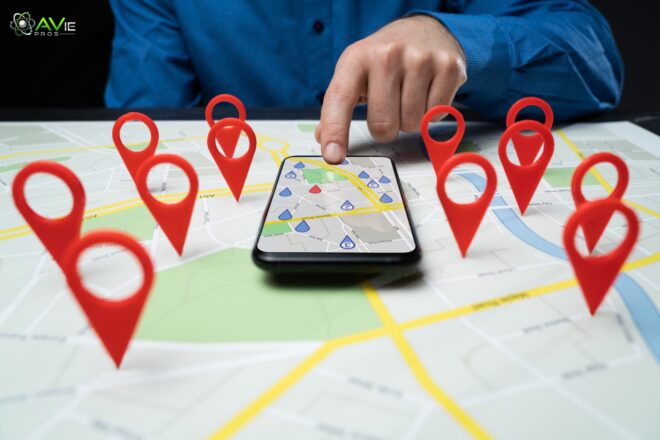
For this reason, they must be consistent everywhere. Make sure your information is consistent across directories like Apple Maps, Bing Places, Yelp, and the Yellow Pages. To check your current citations and fix errors, you can use tools. Your online reputation will improve if your citations are consistent and correct.
5. Encourage and Respond to Online Reviews
Local SEO heavily relies on reviews. They have an impact on your Google ranking in addition to influencing customers. A company with a large number of positive reviews is more likely to rank higher in search results. Urge pleased clients to post reviews on Yelp, Google, and other pertinent websites.
You can use QR codes that drive customers to your review page, ask them in-store, or even put a reminder on receipts. Additionally, responding to reviews is essential. Express gratitude for positive comments and properly address negative ones. Trust is increased, and unhappy customers may become loyal ones if you show that you value their feedback.
6. Refine Your On-Page SEO
Your website will rank higher in search results if you use on-page SEO. Adding local keywords to your headings, descriptions, and titles is part of local SEO. Instead of just saying “Best Dentist,” for example, you may mention “Best Dentist in San Diego.”
It’s also a terrific idea to create city-specific pages on your website. If you service multiple cities, create distinct pages for each city, making sure to include the appropriate keywords in each one. Make sure your website is mobile-friendly and loads rapidly. Smartphones are used for a lot of local searches, thus, a website that is slow or unusable may lose users.
7. Build Backlinks
Backlinks are links pointing to your website from other websites. They are among the Google algorithm’s strongest ranking signals. For local SEO, local backlinks are especially beneficial. By sponsoring local events, collaborating with other local organizations, or being featured in local news stories, you can acquire backlinks.

You can also gain backlinks naturally by producing content that others would want to link to. Your website will rank higher in search results and have more authority if it has more high-quality backlinks.
Local SEO Tools
You can manage and improve your local SEO with the help of several tools. The free Google Search Console shows you how well your website does in search engine results. You can find local keywords with the help of Google Keywords Everywhere.
Additionally, there are premium tools like Semrush that can manage your citations, track your reviews, and keep a watch on your rankings. It’s easier using tools, especially if you’re doing multiple locations.
How to Monitor Your Local SEO Results
You can’t simply perform local and best SEO for small business once and be done with it. You need to monitor your progress because rankings are subject to regular changes. You may monitor the positions of your keywords in Google Maps and Google Search. You can make adjustments if you see a decline in your rankings.
Track tools can show you how your competitors are performing. Knowing this can assist you in figuring out what needs to be fixed. To maintain your reputation and have current information, you should also regularly check your reviews and citations.
Start Building Your Local Visibility
Perhaps the most practical way to reach new customers in your area is through local SEO. You may increase your visibility and attract more local traffic by conducting keyword research, optimizing your Google Business Profile, collecting reviews, fine-tuning your website, and building backlinks.
It takes time and patience, but the rewards are worth it. More clients, more credibility, and greater business growth are all linked with increased visibility.
Conclusion
One of the most effective strategies used by small and medium-sized businesses to compete online is local SEO. Local SEO focuses on the people who are most likely to visit your store, give you a call, or schedule your service, whereas general SEO targets a larger audience. It makes it possible for companies to appear just when nearby clients are searching for a solution. Every step in local SEO, from creating a strong SEO Google My Business Profile to requesting positive reviews, promotes visibility and trust.
You may compete with large businesses in your area and achieve long-term growth by being consistent, optimizing your website, and monitoring your progress. Local SEO is an ongoing process that calls for patience and frequent changes. It is not completed all at once. However, the reward is valuable because you are reaching actual people who are ready to act, not just obtaining clicks.
FAQs
What is the difference between SEO and local SEO?
SEO is the process of improving your website to rank higher on search engines for any audience across the world. Local SEO is more specific because it targets people in a certain city, area, or region.
How long does it take to see results from local SEO?
Local SEO does not work overnight. In most cases, it takes around three to six months to see noticeable improvements, depending on how competitive your area is and how strong your strategy is.
Do I need a website for local SEO?
Having a website is very helpful, but it is not always required. Google Business Profile can allow you to appear in local search results without a website.
Why are reviews important for local SEO?
Reviews show search engines and potential customers that your business is trusted and reliable. A high number of positive reviews can improve your local ranking and increase the chances of people choosing your business.
Can small businesses compete with big brands using local SEO?
Yes, absolutely. Local SEO gives small businesses a fair chance to appear in front of nearby customers, even if big companies have larger budgets.