

Search engine optimization (SEO) is a huge industry that is currently doing $80 billion business all over the world. Do you know the worth of SEO content writing?
Essay writing is an incredible skill that teaches proficiency and real-time information. It’s a blend of information, art, and content creation with ranking techniques to reach more people.
So how do we need to start and how can we write authentic content to engage our readers? That sounds a bit difficult, but it’s not. Engage with us to crack a complete guide of what SEO writing is and how to start your journey:
What is SEO Blog Writing?
People call it content writing, blog posts, blog writing, article writing, copywriting, and much more. But when we use the word SEO it means adding a few values and strategies to rank your blog post on Google with specific on-page optimization.

A simple blog is not content writing, but when we add high-quality content with high-volume keywords to match the results of Google with our content for an organic approach, it is basically known as SEO. For your SEO content writing, you only need on-page because off-page is a further procedure that we do after publishing, so it’s a separate topic.
As your content writing is a focused process on your product, app, or something you are working on, let’s understand what the terms of Search Engine Optimization writing are and how we can use these technical terms to get amazing results. The details are given below and are really easy to understand for all.
SEO Terms with Roadmap
There are multiple steps that are the parts of SEO services. We will explore each step in detail and understand why it’s important for our journey. The main point of the story is we have to find a niche for our website or project. Defining your niche is the most crucial part and the whole story of content writing revolves around it.
1. What is Niche?
It’s a phrase of two or three words combined together, giving a significant name about your business or profession. Only the specific words will hold your journey and you post content relevant to your niche to make a clear hook between your readers and audience. The best part is you don’t need to add irrelevant content to your website. Just work on your domain and try to publish every single piece of content that has worth and value. Guide and teach the audience so they can get useful information without being stuck in the game of words only.
After defining the niche, go to the next step that is all about research.
2. Long-tail Keywords
No matter what, research skills are the top priority for content writers. Without having strong skills in research you can’t explore high-volume keywords. This way your organic traffic will be ignored and the mission of being ranked on Google will flop. Good research is the basic thing, and when we step into the world of keywords, we see long phrases having 4 to 6 words called long-tail keywords. Let me tell you in a more specific way: if you search for something like “basketball shoes” then you can also get a long-tail keyword such as “top 10 basketball shoes for Colorado in 2025”.
3. SERPs
This can be considered the result pages that Google shows for your queries. For example, you search “skin care routine” on Google, and after compiling the relevant material for your question, Google will provide you with a list of pages having content about good skin care in just a few seconds. That content is the result, and you can take ideas from those pages to make your own website. These are your competitors that are already ranked in different positions on Google. You can read their content to write better than them and take their place on the first page. It’s totally possible.
4. SERP Position
When Google provides websites related to your question, it means that all the websites have rankings in sequence. The fact is, it’s not just about page one, you can also check further pages for more websites. According to Google’s algorithm, you can only explore mostly 10 websites on its first page, and after that, you need to switch to the second page. This is how each website has specific numbering according to its content and performance.
5. Anchor Text
It’s a very different word, and many people struggle to understand what “Anchor text” is. It is also an essential term used in Search Engine Optimization writing. It’s called hyperlinked words or phrases that are directly linked to the organic traffic of the website. It’s like keywords that can help your writing, so you can take the idea of what direction you need to cover in your content.
6. Meta Description
This description is known as a short summary of your article. You need to write it at the start of your article, even before starting the main content. In other words, we can say that it’s like an abstract of your article where you keep your words very simple and just state the purpose of the article in 160 characters only. A content writer must be capable of writing a 160-character description with a call to action (CTA).
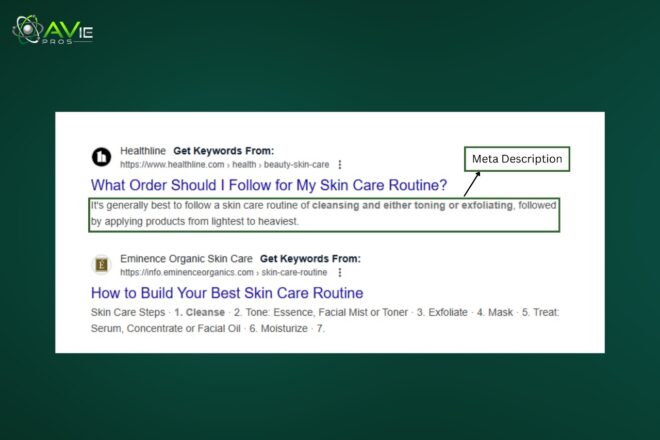
A lot of people may be confused about where we need a Meta description. Let me tell you: when you search your keyword in Google, it shows results of multiple websites. You are able to see only 160 characters of the start of the article in results. If you want to know more inside the article, then you need to click on the website link and it will bring you to the full page where the article is written. You can see how impactful it is for your content writing. Your Meta description should be strong enough to compel readers to open your article.
7. Title Tag
Your article starts with the Meta description, and now it’s time to make the SEO title for your blog. A blog post has a main heading called the title, people also call it the “primary keyword”. Optimizing your headline is very important. Let’s understand how to do it:
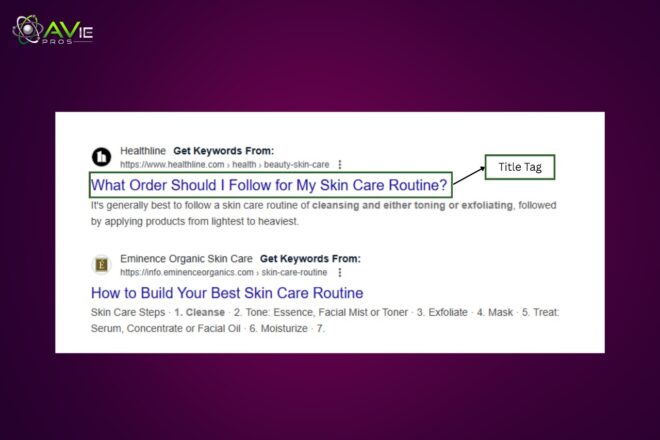
Suppose we are going to talk about the best football players but we don’t know how to start. You need to use the specific words “best football players” in an optimized heading to give a full title to your article. We can go with options like “best football players in world history”, or “top 5 best football players”. See how we add extra words to build the heading while keeping the target words on point with proper sequence.
We can’t misplace the words; we just add a few words at the start or end to make the title perfect. If you are not sure, that’s alright there are a lot of websites that can help you make an SEO-optimized title. I suggest you check answerthepublic.com, which is one of the best.
8. Search Queries
You mostly see that Google automatically suggests some boxes where you can find “people also search for”. It means that a lot of people besides you are also searching the same questions or related ones. These questions are called frequently asked questions. They can help you get more information that people want, and you can also sharpen your experience by adding them.
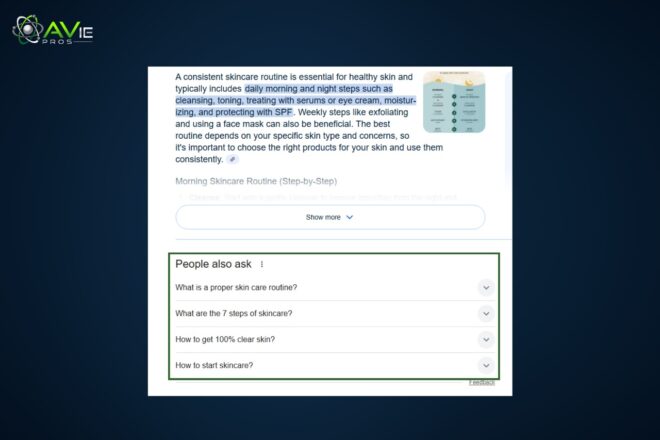
In your writing journey, you should also take care of these questions because you have to answer as many as possible. That way people connect better with your blogs.
9. Search Volume
I recently discussed search volume in the blog, now let me explain what it actually means. It’s the search rate of people in a month. We can guess and understand how many people search a specific keyword each month so we can rank according to its volume. Let’s understand with a simple example. If “best laptops 2025” has a search volume of 10,000, it means that 10,000 people typed the same words on Google in that month.
There’s a community that searches this question about 10,000 times and wants to know about the best laptops of the current year. And it’s not the same people searching again and again. Different people search at different times, and Google gives you an estimated figure. If your volume is high it means that your keyword has potential. More volume brings more benefits, so try to add every possible detail to make your blog phenomenal.
10. CTR
CTR also plays an important role in content writing. It’s a very useful part of SEO. When you work on a blog post you need to check its CTR. CTR means click-through rate. If a hundred people see your website and only 20 click on the link of your website, it means that the ratio of your website CTR is 20%. The more people click and open the website, the stronger the CTR will be.
Try to work on your click-through rate ratio because it depends on the title and meta description of your blog. Write with full focus and add attractive words that can grab the attention of the readers and create hooks and engagement. Simple and easy-to-understand language can help you achieve more traffic organically. Tough wording leaves a negative sign, and you will never grow.
11. Organic Traffic
People always talk about organic traffic but what is organic traffic? Organic means that it comes automatically and you don’t need to pay for it. There are numerous websites that pay for ads on the websites to get more traffic, but it’s not the organic way.
When you write a blog and optimize your blog post in a complete package of SEO, you get a chance to rank on Google and people start reading your blogs just by looking at your titles and content. It means that your work is enough to get organic traffic, and you are not struggling with paid ads to get views to your website. Organic traffic is stable, free, and long-term. You can get views and progress. It’s a sign that your SEO is strong.
12. Structured Data/Hierarchy
Part of your content writing, even local content, also takes care of the hierarchy and the arrangement of data. It is also called schema. It means that you are optimizing your content in arrangement and sequence. Without keeping the connections and without leaving the information incomplete, you don’t go further. In case of irrelevant content, misleading, or misguiding content, you can’t grow your work.
For example, if you are explaining a method of making something in your article and suddenly you miss the main ingredient of the method, it means that you just made an error in the whole recipe. Same like article writing, you can’t ignore the highlight points, sequence, introduction, recipes, events, summary, conclusion, and FAQs. You need to give a structure to your blog post so everyone can see from where you started and how beautifully you ended up.
Summary
We’ve tried our best to compile all SEO terms that are important in your content writing. All the above instructions are useful to understand. If you miss one factor, the whole effort will be wasted. Content writing is not a piece of cake, it’s a useful skill that asks for effort and research. Only quick learners having command on research, capable of typing well, intelligent enough to play with words, and focused people can run a smooth blog post journey.
The above content was almost about on-page SEO but there is another part called off-page SEO. Off-page SEO is required when you publish your article on a website. After that, you take multiple steps to complete your search engine optimization for a complete process. What are the key factors to understand while doing off-page SEO? Let’s move to that.
Other Rules of SEO Content Writing
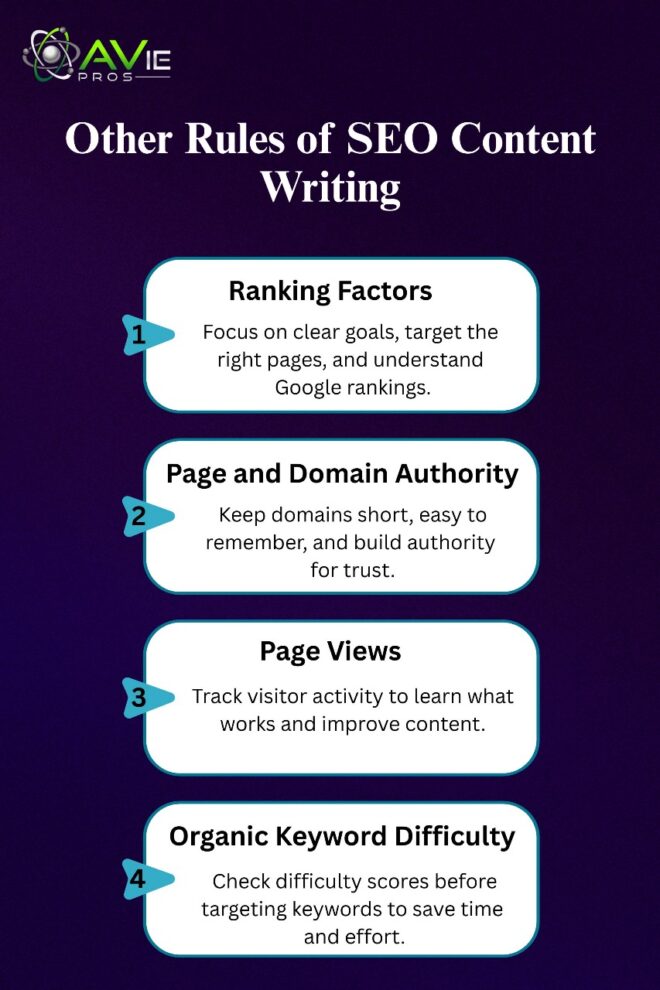
1. Ranking Factors
The general components in SEO content writing are called ranking factors. We need to consider each factor during our work. At the start, the content writer must have a clear goal about the data. He must know which article should rank first and what pages he needs to index. Having an understanding about blog posts and the positioning of ranking on Google is important. When you start judging that your specific pages should rank more than others, it means that you are capable of managing a website.
2. Page and Domain Authority
Domain authority should be the priority because we all know that the domain should be short, easy, and relevant. The reason behind selecting a short name is that people can remember it easily and can visit your website again and again instead of struggling to find the link. And the authority matters a lot. You can check the authority of the domain online from different pages that can scale your domain from one to a hundred.
3. Page Views
When you upload a blog post on a website you can clearly see page views in the history. It shows how many people have already seen your page. You will understand whether people are actually spending time on your website or just leaving it as unnecessary content. You will start learning from your mistakes to make a better version of your website. It’s only possible by looking at the details of people’s reactions.
4. Organic Keyword Difficulty
When you struggle to rank a keyword you need to check it first. Whether you are struggling unnecessarily or not. Before delving into the whole procedure, just check the score of the keyword difficulty whether it’s easy to rank or has tough competition because of too many people working on it. Keep a check on organic keyword difficulty and look for the density. After that, take a decision that suits you.
Top SEO Writing Tips
- Remember that you are not your reader. Do not write for yourself, but always write for the people you want to reach. Understanding what they are searching for and why they are searching is the first step to creating useful content.
- Try to use the same tone and style as your audience. If they prefer a formal voice, keep your writing professional. If they respond better to a friendly and conversational tone, write in that way. Matching their language makes your content more effective.
- Place keywords in the spots that matter the most, such as the page title, metadata, headers, and anchor text. This simple step helps your content show up better in search results.
- Keep your paragraphs short and easy to read. A few sentences in each paragraph are usually enough to keep readers interested.
- Use plenty of white space in your writing. This makes your content easier to scan quickly and creates a better reading experience.
- When linking to other websites, only choose trusted and well-known sources. Search engines give more value to links from strong and reliable websites.
- For internal links, use them where they make sense. Do not link to every single article or page. Instead, connect readers to other pages that are truly relevant to what they are already reading.
- Whenever you make a claim, try to include real data to support it. Numbers, studies, or research make your content more credible and trustworthy.
- Add images that fit your topic and make the content more engaging. Pictures can help explain your message and keep readers interested.
- Think of search queries the same way you think of article titles. This way your content matches what people are typing into search engines.
- Do not focus on hitting a random word count. Write as much as you need to explain the subject fully. The goal is to provide value through quality content.
- Lastly, create content with featured snippets in mind. These are the short answers Google sometimes shows at the top of search results. Writing in a clear and structured way increases your chance of appearing there.
Wrapping Up
What is content writing, blog writing, blog posts, why it’s important to understand the main factors of search engine optimization, and what the role of SEO in article writing is we have discussed all factors above. You don’t need to go anywhere else because you can find details about all steps here. If you don’t understand anything you can ask it through Gmail, we’ll reply to clarify all your doubts.
SEO copy writing has the potential to change your mindset in the progressive world and you can make your own website to start your wonderful and independent journey. Learn and work on this useful skill!
FAQs
What does SEO writing mean?
The content that can match with the keywords of Google and engage people to read for solutions and knowledge.
How do I start SEO writing?
You can start by choosing your niche, doing keyword research, optimizing your heading and finalizing your articles, writing the content for your blog post, and publishing it on the internet.
Is SEO writing difficult?
It’s not difficult to learn, but we need focus and attention while learning the skill.
What’s the salary of an SEO content writer?
People earn thousands and even millions of dollars by selling their skills, and for more benefit, you can also go with your own website development.