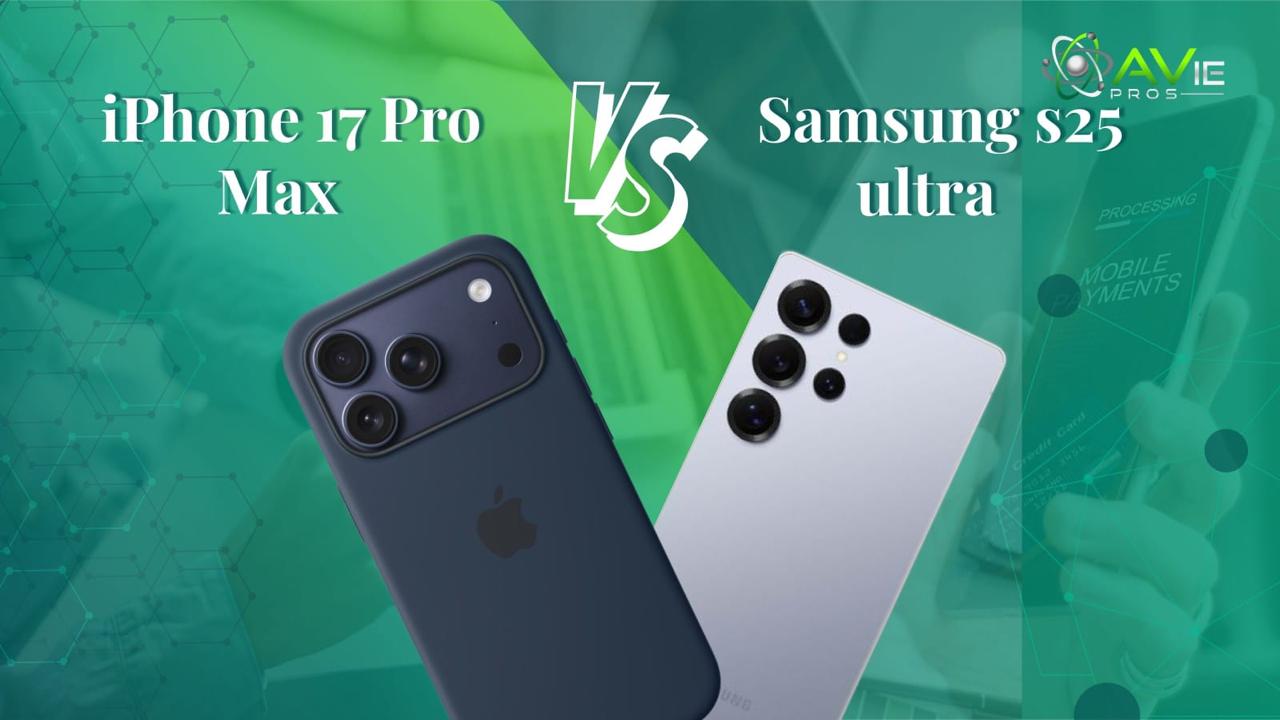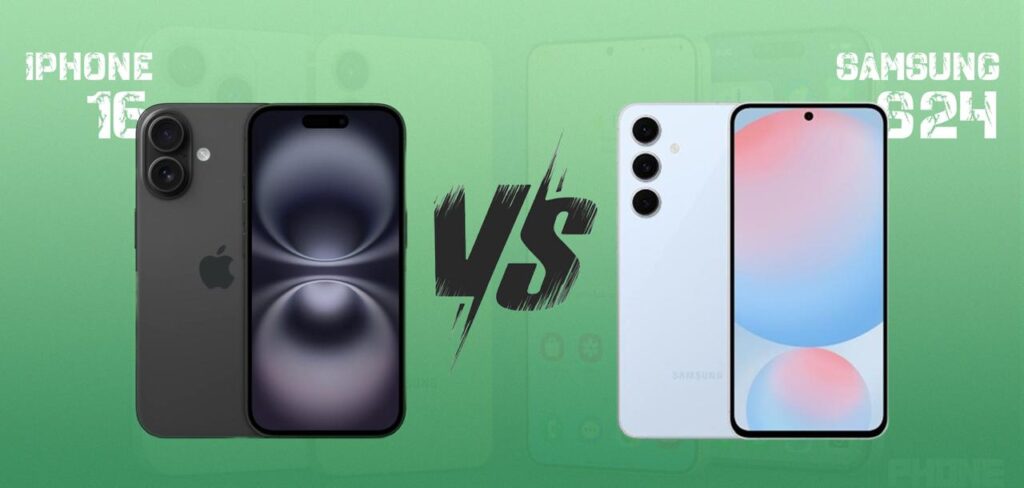
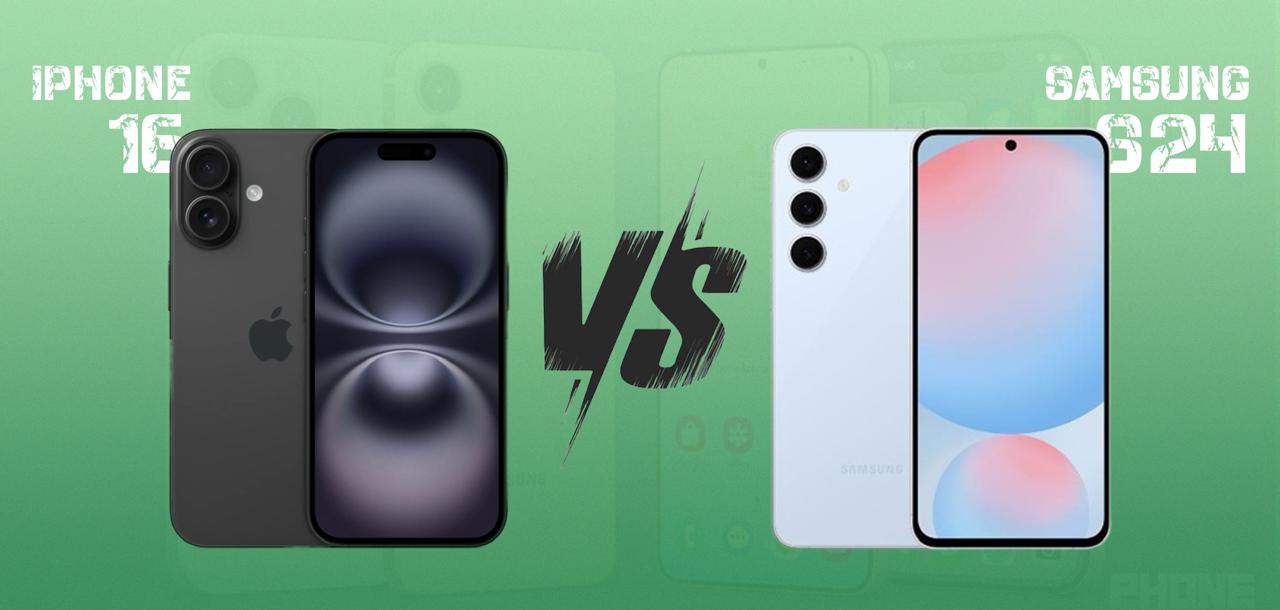
The iPhone 16 vs Samsung S24 battle is only the most recent proxy war between the two phone manufacturers, and it is one of the important arguments of the smartphone age. Although a comparison of the businesses’ high-end models may be possible in an iPhone 16 Pro Max vs Galaxy S24 Ultra.
The S24 and iPhone 16 are the most reasonably priced models in the current flagship lines. Therefore, the majority of people will think about purchasing these phones. Let’s explore the iPhone 16 vs Samsung S24 which is better through a detailed comparison of their specs, features, and performance:
iPhone 16 vs Samsung S24 Comparison
Finally, the Apple iPhone 16 range is available. Thanks to improved software, stronger glass, and fresh silicon, Apple’s most recent smartphones are powerful devices. The phones immediately compete with some of the best Android phones on the market, like Samsung’s Galaxy S24 line. Although we haven’t tested Apple’s most recent gadgets yet, we can get a decent idea of what to expect from their specifications and marketing claims.
iPhone 16 vs Samsung S24 Price
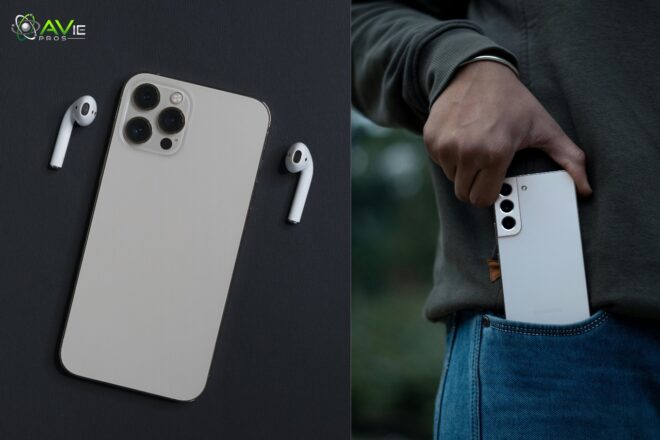
There are seven phones in the Galaxy S24 and iPhone 16 lines. The most costly devices are the $1,599 iPhone 16 Pro Max and the $1,659 Galaxy S24 Ultra, both of which have 1TB of capacity. The entry-level iPhone 16 and Galaxy S24 with 128GB of storage cost $799.
The cost of each device rises as storage capacity grows. Although Samsung charges the highest price for its 1TB model, the iPhone 16 and Galaxy S24 series are very comparable in terms of price.
Design
Every Galaxy S24 and iPhone 16, except the massive Galaxy S24 Ultra, has a rounded rectangle design that is both recognizable and similar. Although Apple embraces its pill-shaped Dynamic Island and Samsung places its in-display front-facing camera in a small, circular cavity.
The front of these phones is dominated by displays with little bezels surrounding the screens. In addition to the camera, the Dynamic Island contains the parts that enable Face ID. Samsung’s most secure biometric solution is still an under-display fingerprint sensor.
The iPhone 16 weighs 6.00 ounces and has dimensions of 5.81 by 2.82 by 0.31 inches (HWD). The 16 Pro weighs 7.03 ounces and measures 5.89 by 2.81 by 0.32 inches, making it slightly bigger and heavier. With dimensions of 5.79 by 2.78 by 0.30 inches and weighing 5.93 ounces, the Samsung Galaxy S24 is the smallest and lightest member of its family.
Controls
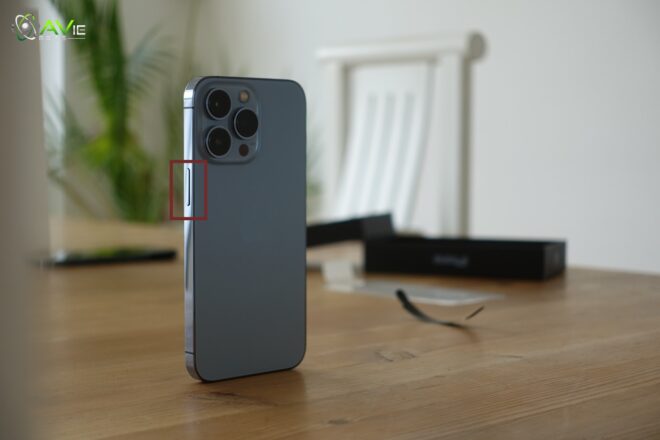
In addition to the usual power button and volume rocker, all of this year’s iPhones come with a new, tiny touchpad called Camera Control and a programmable action button. As the name suggests, Camera Control allows you to control camera features with a simple tap or slide.
A future version is planned to include some advanced functions. Only the S24 Ultra has a stylus that is compatible with the S Pen, allowing you to take notes. Selecting a device will be simpler if you are excited by specialized buttons or a stylus garage.
Like the iPhone 15 before it, the iPhone 16 requires an eSIM to be activated since it no longer accepts traditional SIM cards. However, both a traditional SIM and an eSIM are supported by the Galaxy S24 series. Installing an eSIM usually only takes a few screen clicks, whereas a paper clip is needed for a standard SIM. The latter is more practical for certain people than the former.
Display
High-resolution, pixel-dense OLED screens on all seven phones provide clear, detailed images in bright colors. Let’s focus on the main distinctions. The iPhone 16 and 16 Plus lack an always-on display and instead use a panel with a fixed 60Hz refresh rate. For a number of years, many Android devices have had always-on displays, which are useful for quickly accessible information like notifications and the time.
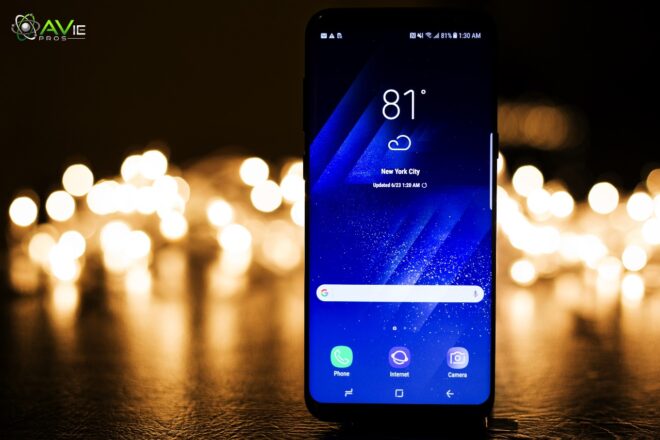
With panels with variable refresh rates between 1Hz and 120Hz, the more costly 16 Pro models offer a power-efficient always-on display and smoother animations. In the meantime, all Samsung Galaxy S24 models include an always-on display with adjustable refresh rates ranging from 1Hz to 120Hz. All of the S24 phones achieve a brighter 2,600 nits, while Apple’s iPhone 16 series reaches a maximum of 2,000 nits at its highest.
Performance
Apple’s processors perform better than Qualcomm’s most recent models. The Qualcomm Snapdragon 8 Gen 3 for Galaxy chip powers the Samsung Galaxy S24 range. Regardless of the model you choose, it provides a great overall experience by effortlessly managing even the most taxing tasks. According to Apple, its new CPUs are designed for Apple Intelligence.
They represent an important improvement over the A16 Bionic and A17 Pro. The Apple A18 CPU powers the iPhone 16 and 16 Plus, while the A18 Pro processor powers the more powerful 16 Pro and Pro Max. When compared to the already excellent performance of the A16 Bionic and A17 Pro CPUs, both provide better CPU and GPU performance.
Camera
The most popular devices from Samsung and Apple combine advanced applications with the best hardware to create stunning photos. Both businesses also made investments in AI picture editing software to produce better finished images. All of Apple’s recent iPhone models can take spatial images and movies that can be seen on the Apple Vision Pro.
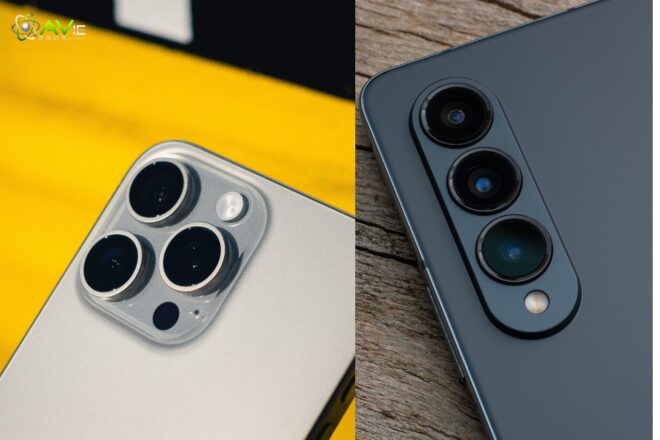
When it comes to video, Apple and Samsung are different in one important regard. Apple’s iPhone, especially the iPhone 16 Pro, may be used as a true professional video camera, whereas Samsung targets the social media creator market. When using an external recording device, it can capture ProRes video at 120 frames per second and up to 4K resolution. 4K 120 fps video may also be recorded with the Galaxy S24 series, but the files are compressed.
Speaker
Both the Samsung Galaxy S24 and the iPhone 16 have stereo audio systems, but based on comparisons that are currently available, the iPhone 16’s sound quality is slightly superior. While the Galaxy S24’s speakers are described as flatter and lacking in low-end strength, the iPhone 16’s audio system produces a warmer, richer sound with more distinct bass and clearer voices.
Although both phones have comparable loudness ranges and are regarded as “Very Good” by reviews, the iPhone is better for media consumption due to its richer audio profile. Both smartphones rely on Bluetooth or USB-C audio instead of a 3.5mm headphone jack. Even though the difference might not be significant for casual usage, the iPhone 16 is the better choice if sound quality is an issue.
iPhone 16 vs Samsung S24 Battery Life
We tested the iPhone 15 last year and discovered that it has 16 hours of battery life, which is what Apple advertised. According to Apple, the iPhone 16 will have a battery life of 18 hours this year, 24 hours for the 16 Plus, 22 hours for the 16 Pro, and 29 hours for the 16 Pro Max.
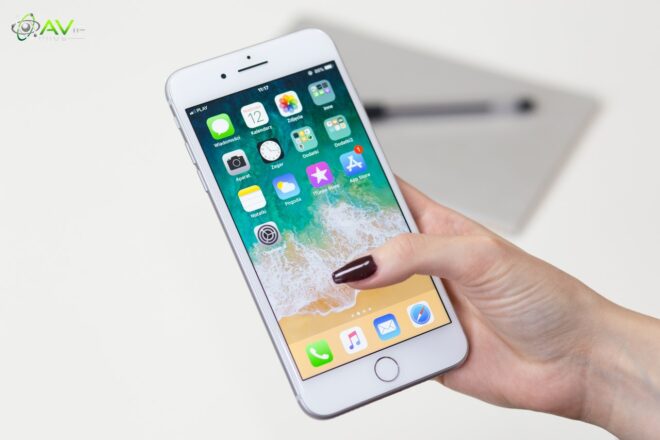
Each iPhone 16 has the capability for standard Qi charging at 7.5W, Qi2 charging at up to 15W, and MagSafe wireless charging at up to 25W. The wireless charging speed and battery size were not disclosed by the company.
The 4,000mAh battery of the Galaxy S24 may be charged via a wired 25W charger. The S24 Ultra and S24+ both have 5,000mAh and 4,900mAh batteries, respectively, and both charge more quickly at 45W when connected. During testing, we discovered that the S24 lasted 13 hours and 5 minutes, whereas the S24+ and S24 Ultra lasted 14 hours and 10 minutes. The Galaxy S24 would be surpassed by the next iPhones if Apple’s claims are true.
Software Support
Apple does not make any specific claims, although it does offer updates for its iPhones for at least a few years. The iPhone 15 is officially supported for at least five years after the first delivery date. A maximum support term has not yet been determined.
Samsung makes it clear that the Galaxy S24 series will get security patches and operating system updates for seven years. Your phone will be updated for a longer period of time than most in any case.
Build Quality and Durability
The Samsung Galaxy S24 and iPhone 16 both feature high-end construction, but the duration of use varies slightly. The iPhone 16 boasts 50% hard glass than its predecessor thanks to its Ceramic Shield front, color-infused glass back, and aluminum frame. It is capable of handling water up to six meters for thirty minutes, thanks to its IP68 classification.
With an Armor Aluminum frame and Gorilla Glass Victus 2 on both sides, the Galaxy S24 is IP68-rated, but only for 1.5 meters of water. The S24’s glass is solid but marginally less durable than the iPhone’s Ceramic Shield, which is more resistant to scratches and drops. With their flat screens and small bezels, both phones have a powerful feel. Both are comfortable to hold, but the iPhone is a little heavier.
Color Options
Vibrant color selections that suit various styles are offered by the Samsung Galaxy S24 and iPhone 16. With its vibrant glass back and five striking colors, Black, White, Pink, Teal, and Ultramarine, the iPhone 16 has a new, attractive appearance. In addition to the four standard colors, onyx black, marble gray, cobalt violet, and amber yellow.
The Galaxy S24 comes in three unique colors that are only offered on Samsung’s website sandstone orange, Neelam blue, and Z Green. The iPhone’s colors seem unusual and modern, whereas Samsung’s blend of quiet and vibrant hues offers greater variety if you buy directly from Samsung.
Gaming Performance
Both the Samsung Galaxy S24 and the iPhone 16 handle gaming well, they each excel in different ways. The A18 chip in the iPhone 16 offers strong overall performance, doing extremely well in CPU-intensive games and on benchmarks such as Geekbench. It smoothly runs console-stage games like Resident Evil, thanks to developer support and Apple’s streamlined iOS.
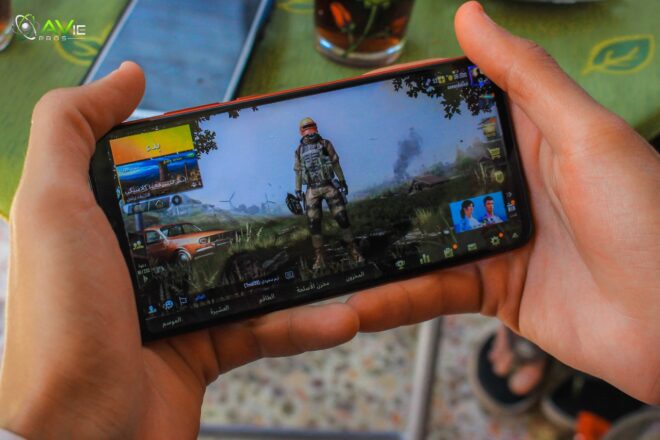
Its 60Hz display, however, may feel less fluid for games that move quickly. The Snapdragon 8 Gen 3-powered Galaxy S24 performs better in portrait mode, which makes it a better choice for demanding games like Genshin Impact. Smoother images are guaranteed by its 120Hz AMOLED display. While the iPhone remains cooler, the S24 can get heated during long classes.
The Final Verdict
The iPhone 16 vs Samsung S24 features comparison highlights unique aspects of each phone. Performance-wise, the iPhone beats the Galaxy S24 thanks to its quicker processor and cameras. Convenient Action and Camera Control buttons, among other design improvements, give the iPhone 16 a competitive advantage. Additionally, be aware of how simple it is to update your software on the iPhone 16.
On the other hand, the Galaxy S24 has a little longer battery life and a better display because of its quick refresh rate. Additionally, we would argue that Galaxy AI features currently outperform Apple Intelligence, but it’s unclear how long that will hold true given Apple’s AI drive. So, according to our personal experience, Galaxy S24 is the best purchase. Happy Shopping!
FAQs
Which phone’s speakers are better?
The iPhone 16 is slightly better for media consumption thanks to its dual speakers, which offer warmer, fuller sound with deeper bass and sharper vocals. Instead of a 3.5mm headphone jack, both use Bluetooth or USB-C.
What is the difference in their charging speeds?
Up to 27W cable charging and 25W MagSafe wireless charging are supported on the iPhone 16. The Galaxy S24 has 15W wireless and 25W wired charging capabilities. While the S24 finishes a full wired charge more quickly, the iPhone charges wirelessly more quickly.
What is the difference in their charging speeds?
Up to 27W cable charging and 25W MagSafe wireless charging are supported on the iPhone 16. The Galaxy S24 has 15W wireless and 25W wired charging capabilities. While the S24 finishes a full wired charge more quickly, the iPhone charges wirelessly more quickly.
What is the best phone for gaming?
The A18 chip in the iPhone 16 is excellent at CPU-heavy games, making it perfect for Resident Evil and similar titles. The Snapdragon 8 Gen 3 in the Galaxy S24 features a smoother 120Hz display and better graphics performance. The iPhone works well with Apple’s gaming ecosystem, whereas the S24 is better for games that require a lot of graphics.