

Ever wondered why your website is stuck on page 3 and how you can rank higher on Google in 2025? Well, it all starts by knowing how to do keyword research for SEO the right way.
Finding the best keywords for your website/blog is a common problem faced by many bloggers, business owners, and content creators. But the good news? Learning keyword research is not as complicated as you think, and even a beginner can get the job done.
Luckily, in this simple step-by-step guide, you’ll get to know everything about keyword research. Let’s start searching for keywords that reach the targeted audience and grow your traffic.
What is Keyword Research and Why is it Crucial for SEO?
To make your website show up on Google in 2025, you want more people to find it online easily, and that starts with the right keywords. You need to know what the audience is searching for before ranking a website. Now that’s where keyword research comes in. In building a strong SEO strategy, especially in 2025, it’s one of the most important steps to follow.
What Is Keyword Research?
When searching for something on search engines such as Google, keyword research is about finding specific words and phrases that people use. With simple terms like “best running shoes for men” or questions like “how to bake a cake,” there are variations in how users search their queries on search engines.

By targeting these keywords in your content, you match the audience’s search intent. Users’ searches for these exact words increase the chances of your website showing up on Google.
Why Is Keyword Research So Important for SEO?
Keyword research is the foundation of SEO. It is the first and probably the most important step while doing SEO for your website. To bring in the right traffic and make your content visible on Google, you have to uncover those hidden keywords, especially from the SEO point of view. And that is only possible with proper SEO keyword research.
For beginners and intermediates, the process of finding keywords seems to be a challenging one, but it doesn’t have to be complicated at all. By mastering the keyword research process, even when you’re not an expert, you get a clear idea of what your audience wants. It shows you:
- What topics matter to them?
- How often do people search for those topics?
- How hard is it to rank for certain keywords?
Search engines like Google are more likely to show your pages to the right people when you place highly searched keywords in your content. Better search visibility, more organic traffic, and higher chances of getting clicks, leads, or sales as a result of this approach.
How Search Behavior Is Changing in 2025?
When it comes to search, it’s no longer just about typing a few words. There’s a significant change in search behavior. In 2025, people ask longer questions using the voice search feature and want fast answers. As a result, keywords become more natural, more precise, and more focused on problems that exist.
With search engines getting smarter, it’s more about the search intent behind a keyword. Therefore, your keyword research approach needs to adapt quickly and look to go beyond just basic terms. By focusing on creating helpful content that answers real questions, always look for long-tail keywords and understand user intent.
How do I Find my SEO Keywords?
In creating content that ranks on Google, the first step, which is considered the hardest among many bloggers and content creators, is to identify high-potential keywords. While finding keywords that people search, there’s no need for any fancy tool. To get started, you just need an idea of what users are looking for and who you’re talking to.
1. Know Your Audience and Niche
Who are they? What problems do they face? What kind of content do they search for online? These are the questions you should ask yourself before starting to explore keywords to get to know your target audience better. To help you pick keywords that match your audience’s needs, understanding your niche is vital.

For example, “easy dinner recipes” or “quick vegetarian meals” are the terms that your readers might be searching for if you are a food blogger. On the other hand, people might look for services like “plumber near me” or “best dentist in Detroit” in case you’re running a local business.
2. Brainstorm Seed Keywords
The basic words or phrases related to your topic are termed as seed keywords. In starting the research process, these terms help a lot.
For example, seed keywords for your fitness niche might be:
- Home workouts
- Weight loss tips
- Healthy meals
- Fat loss tips
List down as many simple ,core ideas as you can ia n Google sheet. Later on, you will get more detailed terms by going through these keywords.
3. Look at What Your Competitors Are Ranking For
Another effective method of finding keywords is competitor analysis. In the same niche, check what your top competitors are doing. You can get a lot of ideas regarding what topics they cover by going through their websites or blogs. Also, look at their page titles, headings, and meta descriptions.

In addition, to see which keywords they’re ranking for, use free tools like Ubersuggest or Google Search Console. Once you go through your competitors in that particular niche, you get clear hints of what’s working and what the audience is already searching for.
Tools to Help You Discover High-Performing Keywords
When you have the right tools, learning how to do keyword research for SEO gets a lot easier. With these tools at your disposal, you get a lot of help regarding what people search, how often they search, and which terms are easier to rank for. The following are some of the tools that can open the world of keywords to you.
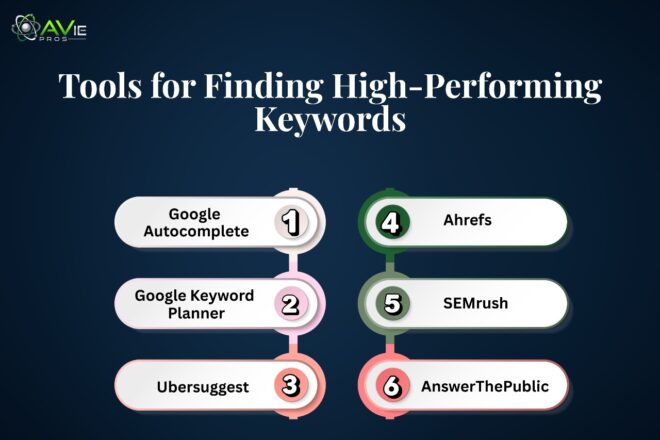
1. Google Autocomplete
To discover those long-tail keywords and related search queries, Google Autocomplete is a fast, free, and perfect tool to have for your keyword research process. You’ll see a lot of suggestions for real search terms that people are using when you start typing a phrase in the Google search bar.
2. Google Keyword Planner
To get ideas about keywords, their search volume, and their competitiveness, Google Keyword Planner is another free tool from Google that can be very helpful. As a newbie, if you want to know how to do SEO keyword research using real data and by understanding search intent, this tool is perfect to have.
3. Ubersuggest
Neil Patel’s Ubersuggest is one of the most well-known tools to have for keyword research. For each keyword you search, it provides complete data like keyword suggestions, competition, and even shows top-ranking pages. To build their SEO strategy with easy and clear insights, small business owners and bloggers find this tool great to use.
4. Ahrefs
One of the most powerful and paid tools for deep keyword research is Ahrefs. Among all the keyword research tools, Ahrefs has the largest keyword database of 28.7 billion keywords. All kinds of information you get, like keyword difficulty, who’s ranking now, and also related keywords when you search in this tool. Over time, you can also track keyword performance.
5. SEMrush
With SEMrush, you can find high-performing keywords, see your competitors’ rankings, and plan your content strategy. It’s an ideal tool to stay ahead in search results for marketers and content creators.
6. AnswerThePublic
All the questions related to your keyword that people ask about it can be shown in this tool. To give you great content ideas for your website/blog, you’ll see “what”, “where”, “when”, “how”, and “why” questions. AnswerthePublic is one of the most widely used tools by marketers and bloggers. Understanding search intent and creating helpful people-first content gets easier with this tool.
In helping you know keyword research for SEO more smartly and simply, each of these tools plays a big role. Depending on your budget and needs, select the one that brings real results by uncovering keywords.
What Is the Best Keyword Research Technique in SEO?
You need to go beyond just random keywords when it comes to higher rankings and targeting the right audience. Focusing on search intent, using long-tail keywords, and understanding related terms is the best and recommended technique for keyword research. With this solid approach, you get better content context and depth that Google loves.
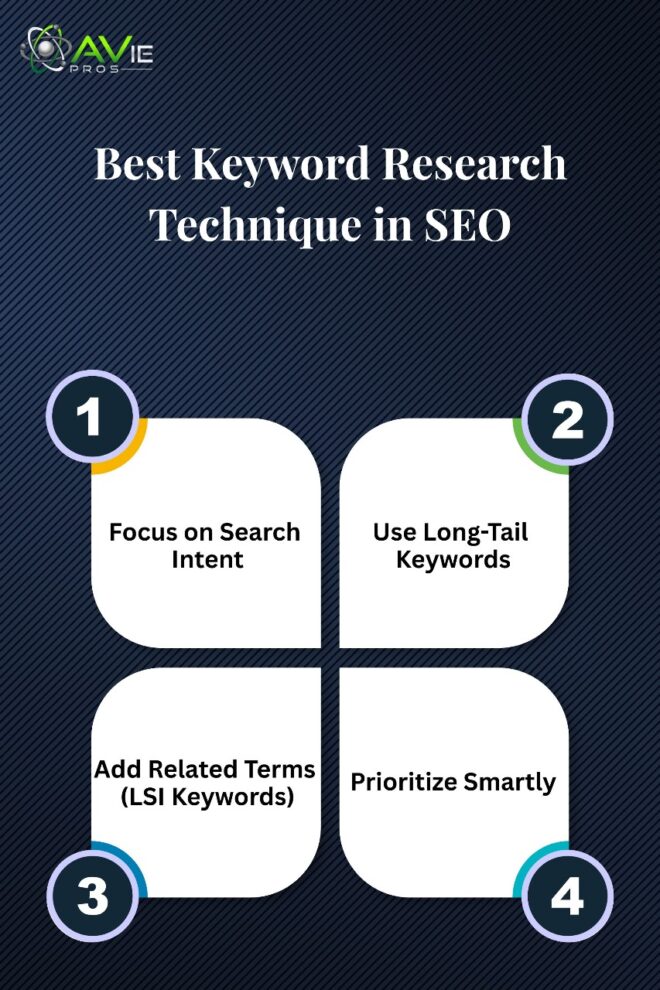
1. Focus on Search Intent
The reason behind the user’s search is search intent. Informational, commercial, transactional, and navigational are the four common types of search intent. By keeping these types in mind, you get a clear clue of whether the person is looking to learn something, buy something, or find a specific website.
For example:
- “What is SEO?” = Informational
- “Best SEO tools” = Commercial
- “Buy SEO software” = Transactional
- “Ahrefs login” = Navigational
Google is more likely to show the desired results when your content matches the searcher’s goal. So, before writing content on a random keyword, always ask: What does the person want when they search for it?
2. Use Long-Tail Keywords
Any term containing more than 3 words is a long-tail keyword. They are more specific phrases and often reach the right people despite fewer searches. With low competition and strong user intent, long-tail keywords are much easier to rank.
Examples:
- Short keyword: “shoes”
- Long-tail keyword: “best running shoes for flat feet”
3. Add Related Terms (LSI Keywords)
Words and phrases that are closely related to your main topic are Latent Semantic Indexing keywords (LSI). They are different from secondary keywords and help search engines to understand your content better.
Example: If your main keyword is “healthy smoothie,” related terms could be:
- “fruit smoothie recipes”
- “Blender drinks”
- “low sugar options”
To improve your SEO relevance and to achieve more depth, use these LSI terms naturally throughout your content.
4. Prioritize the Right Keywords
It’s not a smart move to target every keyword. There are a few parameters to look at while selecting the best ones. These are:
- Search volume – how often is it searched?
- Keyword difficulty – how hard is it to rank?
- Relevance – does it match your content?
- Intent – does it align with what your audience wants?
A more suitable approach early on is to use a mixture of long-tail keywords and high-relevance terms. Over time, as your site grows, look for more competitive ones.
Step-by-Step: How to do Keyword Research for SEO in 2025?
To make your content rank higher and reach the right people is not a simple task. But by doing keyword research the right way can make this path simpler and easier. In 2025, it’s all about writing useful, clear, and high-quality content. And that is only possible by understanding your audience and matching their search intent. To build a smart SEO keyword strategy, follow the simple steps.
1. Identify Your Goals
Always ask this question before starting: What do I want to achieve with my content?
Are you trying to sell a product, get more websites visits, or answer a common question? Choosing the best keywords is all dependent on your content goals.
For example:
- Inform: “What is on-page SEO?”
- Sell: “Buy organic skincare products”
- Guide: “How to start a blog in 2025”
The more clarity in your goals, the better your keyword choices will be.
2. Create a Keyword List
After identifying your goals, next step is to start creating keyword ideas by brainstorming seed keywords. For better keyword ideas, use tools like Google Autocomplete or SEMrush.
Example seed keyword: email marketing
Expanded ideas:
- “email marketing tips”
- “best email subject lines”
- “email campaigns for small business”
Make a solid list of related keywords that your audience might search for.
3. Analyze Search Volume & Competition
Once you have a list of keywords, start analzying each one by checking how often it is searched by users and ranking competition. For this purpose, you can take the help of tools like:
- Google Keyword Planner
- SEMrush
- Ahrefs
When selecting a keyword, always look for a good balance:
- High search volume = people are considering it
- Low to medium competition = better chance to rank
4. Group Keywords by Topic and Intent
Next up in the keyword research process is keyword grouping. Based on topics and intent, organize your keywords into different groups.
For example:
Topic: Blogging Tips
- “how to start a blog” (Informational)
- “best blog platforms” (Commercial)
- “Wix vs WordPress” (Navigational)
With keyword grouping, you can meet the user needs by creating focused content.
5. Apply Keywords to Your Content Strategy
Now’s the last stage is that in your content plan, plug those keyword groups. Considering what people are searching for, create blog posts, landing pages, or product descriptions.
Always make sure:
- In the title and headings place your primary keyword.
- Add some LSI keywords like “SEO best practices” or “Google ranking factors” for more depth and better understanding of context.
- Match content to the user’s search intent
In this way, you make the content clear, useful, and SEO-optimized.
Common Mistakes to Avoid in Keyword Research
Your chances of ranking can get hurt by doing simple keyword mistakes. And even the best tools and tips can’t help you. By avoiding these common keyword research errors that many beginners still make, you can succeed with SEO in 2025.
1. Ignoring Search Intent
While doing keyword research, not thinking aout why someone is searching is one of the biggest mistakes. Picking a keyword is one thing, but it won’t rank well or worse it won’t help the reader either if your content doesn’t match the search intent.
For example if someone searches “how to bake a cake” wants recipe information not the cake baking history. By focusing on what your audience wants, always match your content with it.
2. Targeting Keywords with No Traffic
A keyword despite sounding right having no search volume won’t get you traffic at all. Unless they’re part of a bigger strategy (like answering niche questions) always avoid targeting low volume keywords. To see if your keywords get any real searches, check tools like Keyword Everywhere or Ahrefs.
3. Keyword Stuffing
Google doesn’t like keyword stuffing. It’s as simple as that. In 2025, this old card trick no loner works on wesites or blogs. It can make your content sound weird by placing keyword too many times forcefully. So, to help search engines understand your content, it’s much better to write naturally by including related keywords like “organic SEO,” “on-page SEO,” or “ranking factors.”
Focus on creating people friendly content first, not search engines.
4. Not Updating Your Keyword Strategy
With evolving in SEO trends, there’s also a change in words that people use to search. Changing or updating your SEO keyword strategy is vital in 2025 to stay relevant and reflect new topics. Your content might become outdated if you use the same keywords year after year.
Conclusion: Start Smart with Keyword Research in 2025
Now you know why it matters more than ever to know the basics of how to do keyword research for SEO. From finding the right keywords to matching them with search intent, and then using smart tools to grow your website traffic all covered in this helpful guide.
Staying flexible and remaining up-to-date is key in 2025 as search trends keep on changing rapidly. SEO is evolving with time, so keep learning and testing because what works today might not work tomorrow.
So, are you ready to take the next step? Start building your keyword list today by opening a free tool like Googe Keyword Planner or SEMrush. A little keyword research now can bring big results later.