Is the speed of your computer slow? Are you trying to find out how to speed up your computer? You’re not alone. We can help you whether you want to boost your computer’s speed for work or gaming. These tested methods will help you get your computer operating like new again.
While you can upgrade your computer to improve performance, there are many cheap ways how to enhance computer speed without breaking your budget. These optimization methods can greatly increase the performance of your computer and make it perform better overall. Let’s explore it:
Causes of Slow Performance
Before discussing possible solutions, we are going to have a look at the specific causes of slow performance. It’s important to know the facts behind happening, otherwise we cannot fix the actual issue. Now, let’s analyze what could be causing your computer to lag:
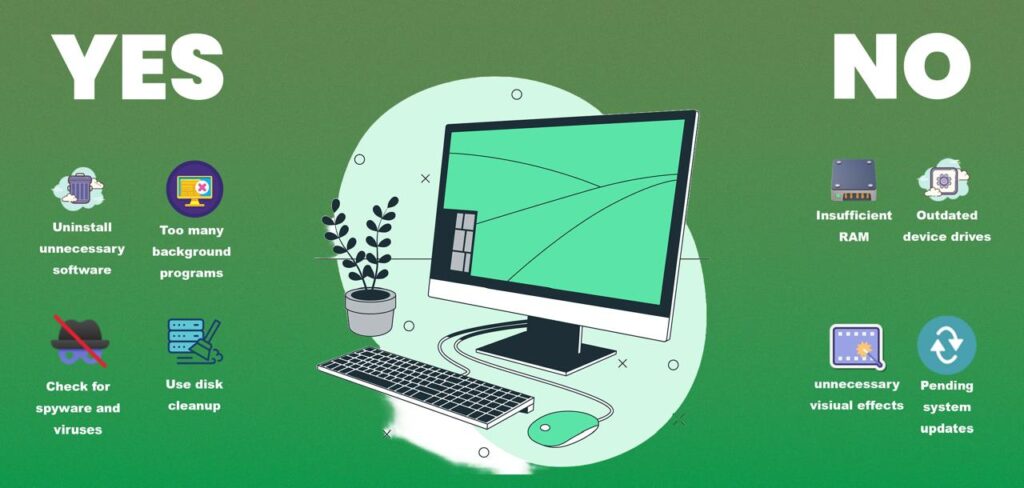
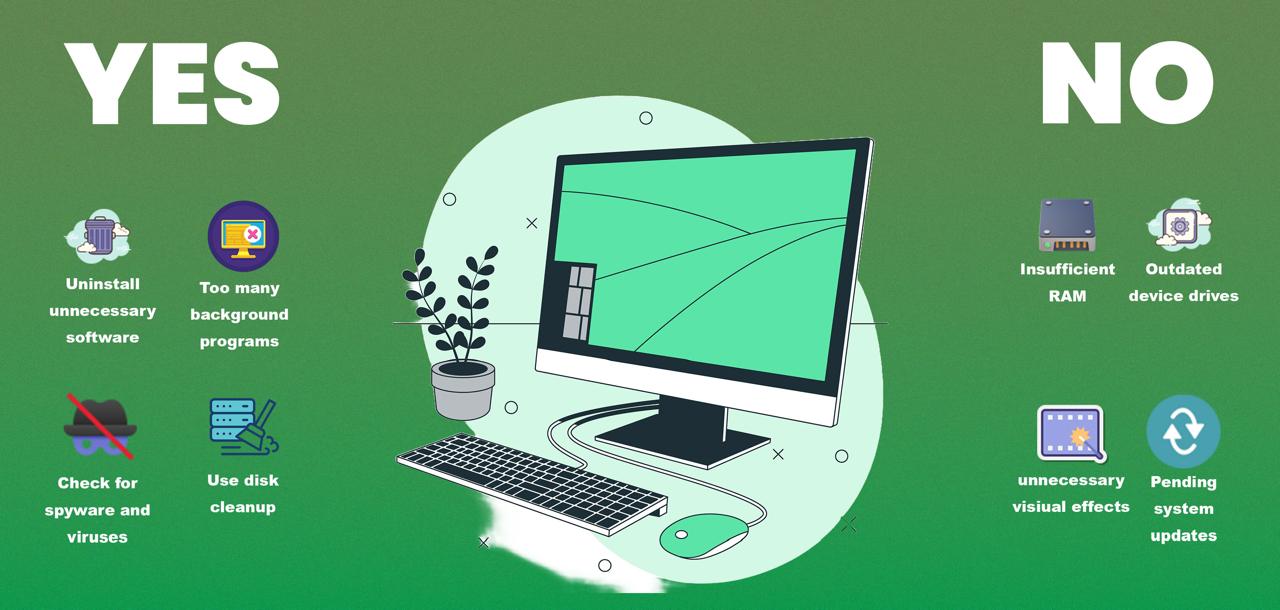
- Full hard drive
- Malware infections
- Insufficient RAM
- Too many background programs
- Outdated hardware
- Unnecessary visual effects
- Pending system updates
- Outdated device drivers
Useful Methods to Increase Computer Speed
Let’s look at a few simple methods how to fix a slow computer or boosting your computer’s performance.
1. Hardware Solutions to Speed up Your Computer
Smart hardware upgrades are the best method for boosting PC speed. Take some of the following proven ways to how can I make my computer run faster:
Memory Upgrade: One of the most affordable methods to increase computer speed, especially when multitasking, is using a RAM upgrade kit.
Storage Solution: Computer performance and boot times can be greatly improved with an internal solid-state drive (SSD). Using USB 3.0, a portable external SSD can improve computer performance.
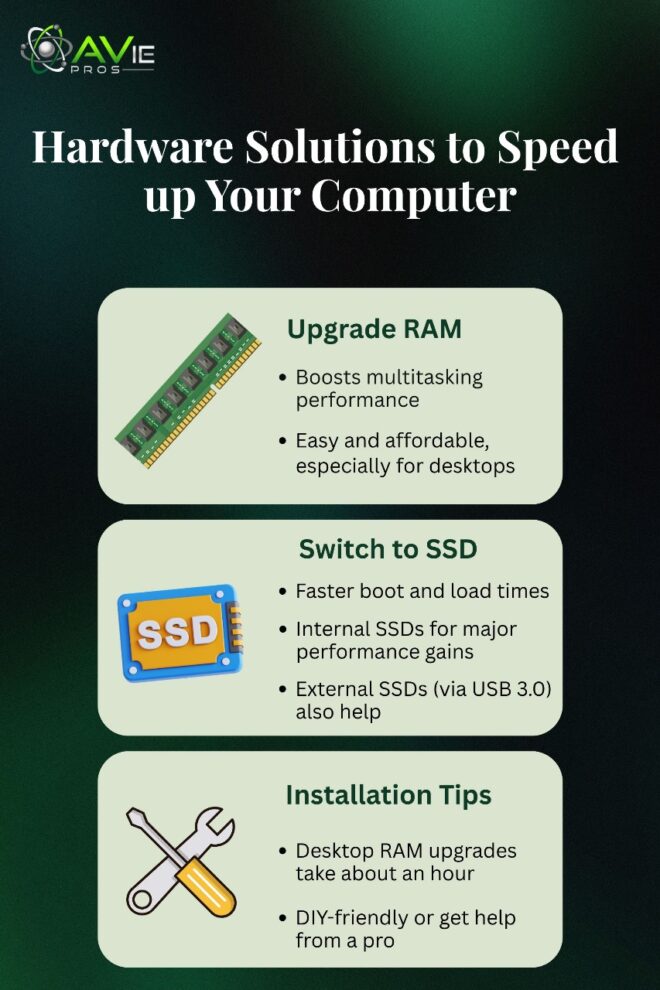
Computers running Windows 10 and 11 can be improved especially well by increasing the RAM. Increasing RAM is still a reliable way of improving PC speed, however, modern operating systems consume less RAM than previous versions.
Adding extra RAM to desktop computers is not only much cheaper but also a lot simpler. In around an hour, anyone with a basic knowledge of a desktop tower can easily install more RAM. If you are unaware of the process to install more RAM, you can alternatively bring your computer to a professional shop.
2. Uninstall Unnecessary Software
Many people have installed some programs on their computers that they don’t use. These software can cause of using system resources. Additionally, some programs can generate unnecessary files that cause the computer to lag. People install software that includes automatic downloading of other software. These automatic downloads are unnecessary to use. So, try this method:
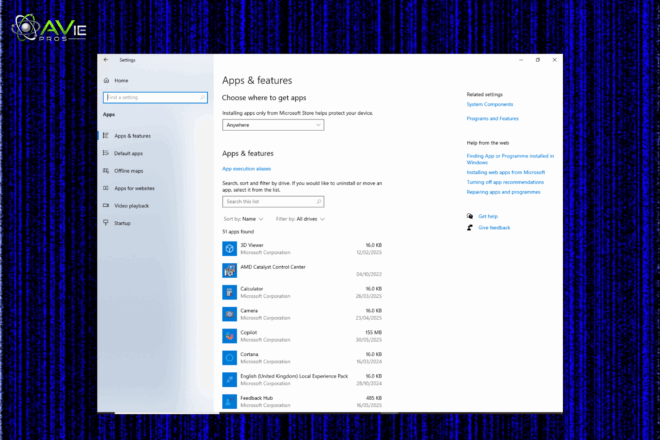
- To make disk space available, remove them from your computer.
- After selecting the “Start” option, go to the “All apps” menu.
- A list of the apps you have installed will be shown in the menu.
- To access the “Options” menu, right-click on the icon of the program you wish to remove.
You can also go to Programs and Features by right-clicking on Start. Cortana, the Windows assistant, can also be useful because it has a search bar that can look for “Programs.” From there, you’ll see a list of the apps that eat up the most space and that you’ve used recently. You can decide which programs can be removed to help enhance system performance after looking through what is installed.
3. Limit the Unnecessary Startup Programs
Similarly, you may control which programs start when your computer first boots up. System speed and boot times can be greatly enhanced by turning off unused startup apps. The Startup options will help the users to decide which apps should be enabled or disabled. This way, you can control the apps that run in the background. To disable unnecessary programs, let’s address this method:
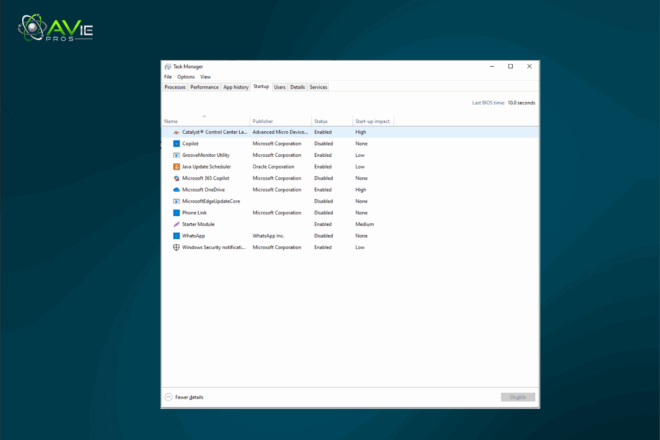
- You can use Ctrl-Shift-Esc to open Task Manager.
- A window listing every program you have installed on your computer will show up.
- Additionally, it provides you with a thorough breakdown of how much RAM each program uses when your computer boots up.
- To make the necessary changes, simply right-click on the application and click on Disable.
If you find that a software is no longer operating, which affects your PC usage, you may always adjust the settings. You can always restart your computer to keep a check on the installed apps.
4. Check for Spyware and Viruses
You will almost certainly get a virus when using the internet, but the new Windows Defender program has made it easier to identify malware that could be seriously harming your computer. In addition to being easy to install, third-party solutions can be as successful in removing any viruses or malware you may have.
Always use the PC Optimization Suite Program that includes performance-enhancing tools and antivirus security. This software works better for antivirus protection, but use the Windows Defender program to detect viruses and then clean them.
5. Use Disk Cleanup
The hard drive of every computer contains a large quantity of useless files and programs. You can free up drive space for the programs you’ll use by using Disk Cleanup to identify which files and applications can be removed from your computer. Disk Cleanup can remove downloaded software files and other unwanted files to clear up disk space.
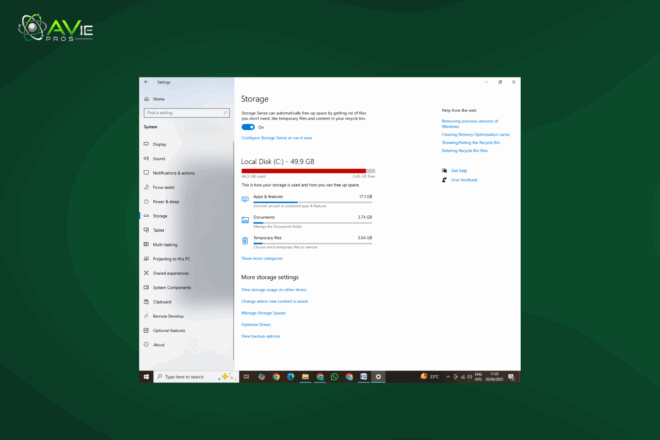
It is quite simple to use Disk Cleanup:
- Type “Disk Cleanup” into the search field on the Start button, and the application will open.
- The Disk Cleanup application scans temporary files, installer programs, and webpages that you never used. It makes your work easier to identify.
- To view more alternatives, users can also choose to clean up system files. This includes deleting system files like older Windows versions.
- After that, it will automatically remove them to make space.
Your PC’s RAM capacity affects how well Disk Cleanup works and may also make your computer operate more slowly than usual. Installing additional RAM on your device can be a smart choice if this is the case.
6. Consider a Startup SSD
A Solid-State Drive (SSD) may improve speed by removing some of the load on the processor during computer boot up. A startup drive can significantly improve the speed and smoothness of programs that you use for photo and video editing, or if you regularly use multiple apps at once.
SSDs can be used on some PC models, however, they are most frequently installed on desktop computers. An external SSD drive that connects to your computer via USB 3.0 is always a choice if you are unable to use an internal SSD. You can use this drive to enhance apps that require additional temporary memory to function properly and to give you the extra push you need to finish tasks at startup.
7. Optimize your Network for Gaming
The cause of lag or slow connection speeds for gamers may be your network connection. Online gaming is highly dependent on your internet connection, even while the mentioned guidance can help your PC run more smoothly.
A gaming router may greatly enhance your gaming experience. By making sure that your computer and network are set up for best gaming performance, a gaming router can also work on the other system performance enhancements you’ve made.
8. Take a look at your Web Browser
Your PC’s speed is commonly affected by small changes. The speed at which websites, movies, and photos load can be affected by your browser settings. Try using a different browser to check whether the loading times are faster if you have been using a certain one and have noticed a delay.
There are other factors besides your browser type that could be causing your computer to lag while you access the web. It is advisable to check your settings and make sure that your cache is empty if it has been full for a long time.
To further optimize your browser:
- To increase processing speed, disable or delete any unnecessary extensions.
- If you’re on an older computer, think about using a lightweight browser.
- For more complex adjustments, use browser optimization tools.
Thankfully, deleting your cache is a simple solution. In the more commonly used web browsers, there are two methods for doing this:
In Internet Explorer:
- Go to “Internet Options.”
- Select the “General” tab.
- Select the “Browsing History” menu.
- Choose “Website Data” and “Temporary Internet Files.”
- Press “Delete.”
In Chrome:
- Go to “More settings.”
- Choose “More tools.”
- Press the “Clear browsing data” button.
- Keep in mind that Chrome lets you remove data after a specific amount of time.
- You should choose “All time” if you have never before erased the files in your cache.
- The “Cookies and other site data” and “Cached images and files” boxes should be checked.
- Press “Clear data.”
It’s a good idea to save your favorite websites just in case, but be aware that cookies can also add the autofill feature to your search bar.
9. Change Visual Effects to Improve Efficiency
Windows has a lot of visual features that might affect system performance, particularly on PCs that are older or less powerful. To maximize them, follow these steps:
- Open the System Properties.
- Then click on the “Advanced system settings.”
- Go to Performance and select “Settings.”
- Select “Adjust for best performance” or change every setting separately.
Follow the above guidelines and customize the settings the way you want.
10. Change Appearance in Performance Options
An older PC may be speed up by changing the performance choices’ appearance. In Windows 10 or Windows 11, in the Start Menu, you may quickly access this feature by typing change appearance into the search box.
Use the Adjust for best performance radio button at the top of the dialog box. These adjustments can improve your PC’s speed within a short interval of time. All of the visual effects are lost if you select the overall best-performance button.
11. Turn off Search Indexing
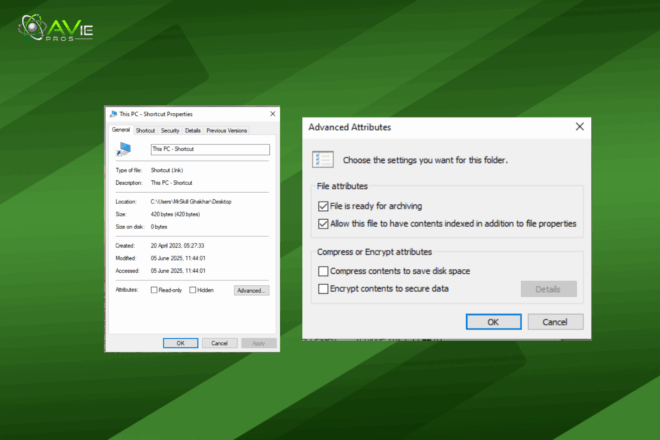
Open the Indexing Options Control Panel, and you can turn on the indexing or disable it. To de-select sets you do not want indexed, click Edit. To make better choices, you’ll most likely need to uncollapse the folders under your user folder. You can select which file types should and shouldn’t be indexed by selecting Advanced.
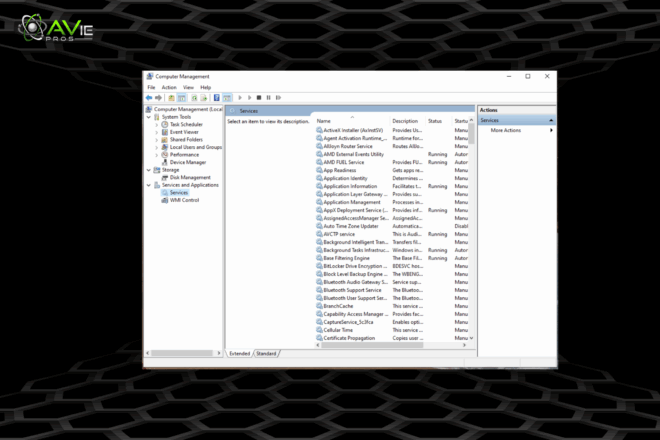
On the desktop, right-click This PC and select Manage. Next, choose Services after double-clicking Services and Applications. You may stop search indexing’s operation when you need more speed, but note that it occasionally slows down your computer.
12. Tips and Tricks
There are a few tips and tricks that can boost the speed and performance of your computer or PC. These tricks are useful and take no longer to fix your problems. Let’s dive into the details of how to make your computer faster:
- Always restart your computer before using it if you are handling multiple tasks on it.
- Remove unnecessary data and files that you don’t use and your daily routine.
- Always keep a check on the Chrome clear cache to maintain the speed of your computer.
- Don’t install heavy games without knowledge, it can increase the load of your PC.
The Final Verdict
It’s not always necessary to upgrade your computer or have technical expertise to how to speed up windows pc. Performance can be much improved by releasing storage, improving startup, updating software, managing resources, and carrying out routine maintenance. The user can try to upgrade the hardware on the outdated PC by adding RAM or switching to an SSD.
If the issues continue, think about getting professional help or starting over by restoring your operating system. You may concentrate on what’s important by following these steps to make your computer run faster, smoother, and more efficiently.
FAQs
Why is my computer so slow?
Your computer may be slow because it contains viruses, missing updates, has too many programs starting up, or is filled with files. File cleanup, program updates, and malware detection can all be beneficial.
Will my computer run faster with extra RAM?
Yes, increasing the RAM on your computer, such as from 8 GB to 16 GB. It will help it manage tasks more effectively if it is slow when you have a lot of apps open.
How can I know if there is a virus on my computer?
Your computer may have a virus if it is slow, crashes a lot, displays unusual advertisements, or behaves strangely. To detect and remove threats, use antivirus software such as Windows Defender.
How can I maintain the speed of my PC going forward?
Update your software, check for viruses, remove unnecessary files, restart once a week, and avoid installing random apps. Every six to twelve months, clean up your computer effectively.
Is my PC slowed down by browser extensions?
Yes, having too many extensions can cause your computer and browser to lag. To free up resources, get rid of those you don’t use.