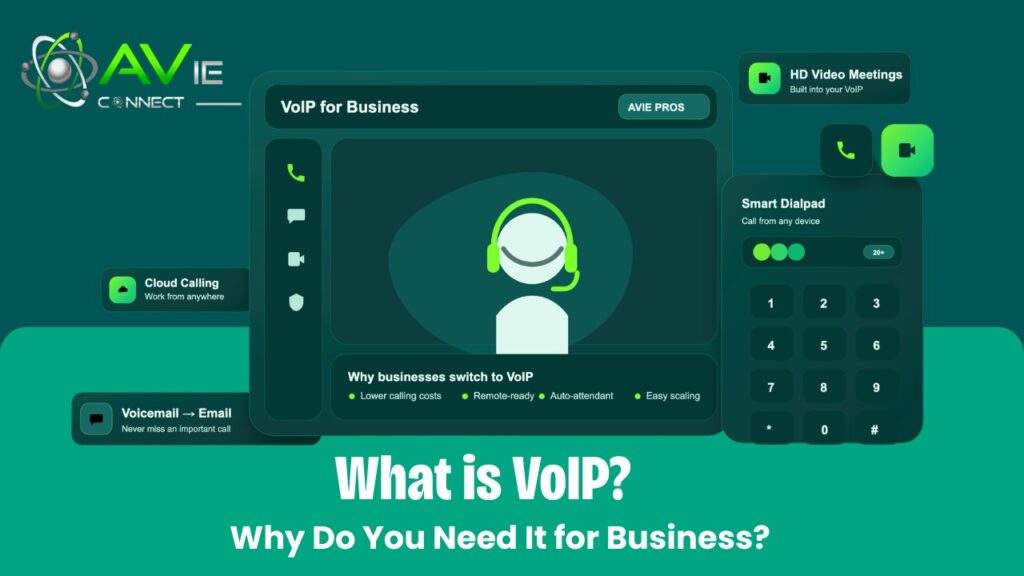
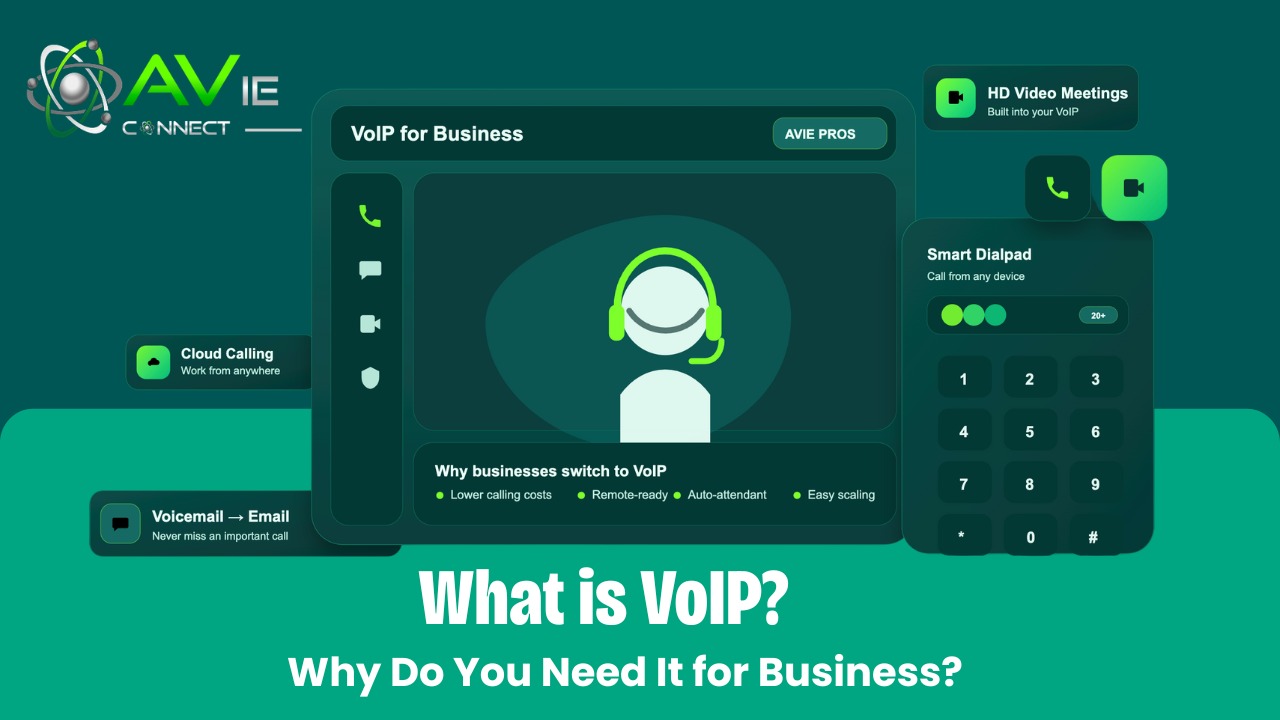
VoIP is a technology for communication that has completely changed how businesses connect with their customers and with one another. Although the majority of beginners are familiar with the word VoIP, they may not fully understand its meaning or the reasons why businesses are slowly moving from older techniques to this one.
VoIP, which stands for voice over Internet Protocol, is a technology that allows phone calls to be made over the internet rather than fixed lines. Because of this technology, communication has changed in a way that is more affordable, quicker, and adaptable. Let’s explore it:
What Does VoIP Mean
VoIP is a technology or method of making calls over the internet instead of using standard copper connections. VoIP is a very simple idea. Your voice is actually converted into binary data and sent across the internet like text. The best part about VoIP is that it allows calling from any location in the world with internet availability.
Because it does not require a local phone exchange to browse or connect to the internet. VoIP technology’s ability to offer businesses and entrepreneurs an extremely affordable means of communication with remote workers or other regional or worldwide branches of a company is one of its main benefits. VoIP technology’s main advantage is its capacity to offer an extremely economical means of communication.
Why VoIP is Becoming Popular Among Businesses
Flexible, affordable, and quick communication methods are highly in demand in today’s world. VoIP meets every requirement in this field, which explains why the technology is so widely used. Today’s businesses don’t want to rely on internal communications.
This technology has been popular since it makes it possible for people to keep getting business calls, whether they are at home, traveling, or moving to another workplace. Apart from this, the advanced features of this technology are the reason why people are using it. This technology, which was highly costly to purchase, offers features including call waiting, voice email delivery, and video calls.
The technology’s ability to connect with other business applications, such as business communication support tools, is another reason why companies have adopted it. With increased global internet connectivity, this technology has grown into a more effective commercial communication tool.
How VoIP Technology Actually Works
Understanding how the technology functions can even help beginners feel more confident when using the system. The microphone on your phone, computer, or VoIP device records your voice when you use the technology to make a call.
After that, your speech is translated into digital language and divided into data packets that are sent via your internet connection to the person you wish to interact with. When the internet connection is smooth and effortless. The packets are reassembled at the other end.
The voice is instantly transformed back into sound. This process takes only a few seconds. While it’s complex processes that take place after you start conversations that feel like regular phone calls to the user, the technology uses specialized software that manages the calls, the quality, and the privacy of the discussions to make it truly efficient and foolproof.
Requirements for VoIP
Every system has some rules and requirements before delving into it. Let’s get into:
1. Choose the Right VoIP Provider
Selecting the best VoIP service provider is important for success. Businesses should choose service providers with reasonable pricing policies, excellent assistance, and a high level of dependability.

In order to prevent problems, functionalities should be in good connection with business requirements. Scalability is a necessity for future growth. High safety features should be present in-service providers to help with administration. Businesses allow for quality with the use of reviews and presentations.
Those who are new to the business should choose those with user-friendly features that make installation simple. It creates the ideal communication partner rather than only a service provider, guaranteeing that VoIP’s advantages reach the business easily.
2. Internet Requirements for VoIP
VoIP requires a dependable internet connection, but it is not too demanding. For a VoIP conversation, a standard business internet connection is sufficient. Compared to downloading files and videos, voice communication consumes far fewer internet resources. Multiple VoIP conversations can take place at the same time with an average internet connection.
For maximum functionality, bigger companies might choose faster plans. Although current Wi-Fi standards are enough, wired communications are more reliable than wireless communications. Despite numerous activities taking place on the internet, business organizations can set up quality of service settings to prioritize VoIP communications for optimal operation.
Difference Between VoIP and Traditional Phone Systems
Traditional phone networks depend on the infrastructure and landlines that have been in use for many years. Modern phone networks require certain fixed locations and wired phone exchanges. Long-distance and international calling on traditional phone networks is also quite expensive.
But VoIP offers much lower or free rates. For startups in particular, setting up traditional phone networks is an expensive and time-consuming procedure. Because new lines must be physically added to the network by making changes to the infrastructure, traditional phone networks are difficult to scale.
However, VoIP is very easy to grow or shrink without the need for wiring, which is one of the reasons why companies from traditional phone networks are using VoIP solutions.
Benefits of VoIP Regarding Business Activities
It has useful advantages that can make the system strong. The best part is that nothing is difficult to adapt to. Let’s understand how meaningful impacts it has:
1. Cost Benefits of Using VoIP for Business
One of the reasons why more companies are using VoIP to reduce expenses is cost savings. Both installation and call costs are necessary for a typical telephone network. Since VoIP depends on standard Internet connections, the majority of these expenses are eliminated. VoIP installation simply requires a single installation fee.

Long-distance and international calls are far less expensive using VoIP, which is advantageous for companies that deal with foreign customers. The majority of service providers enable users to make use of VoIP services, which include making as many calls as they like each month. VoIP services will be very beneficial to smaller enterprises since they will give them professional and affordable methods of communication.
2. Remote Work Culture with VoIP
VoIP is equally important to the increasingly common method of working remotely. Working remotely becomes difficult due to the use of regular telecommunication systems’ usage of fixed geographic locations. Because VoIP allows employees to use business lines on their personal devices, it removes that disadvantage.
Even when working remotely, people can use a laptop, smartphone, or VoIP program to answer business calls. Customers are actually unable to tell the difference when using VoIP because it enables videoconferencing and group meetings that allow all participants to connect remotely, staying in touch for greater business success regardless of the distances separating possible employers and employees.
3. Scalability of VoIP Systems
A company’s communication needs improve as it grows. Scaling the traditional communication system is an issue. Increasing the number of lines in a traditional communication system is expensive and requires installation. VoIP systems are incredibly scalable. It only takes a few clicks on a web interface to add extra users to a VoIP system.
In addition, no additional physical infrastructure or wiring is required. For new or quickly growing companies, this is a significant benefit of VoIP systems. VoIP solutions are instantly flexible without requiring the installation of a communication system if a company chooses to move or expand to various locations within a nation or even the entire world.
4. Businesses Growth
VoIP offers lots of extra features that make business operations more productive. Critical calls are never missed thanks to call forwarding. Customers can instantly receive voice messages in their email accounts with Voicemail to Email. An auto attendant is a feature that professionally answers consumer calls and directs them to the appropriate department.
Because recorded instances are available for analysis, call recording is an additional benefit that allows companies to improve customer service and training. Customers can communicate face-to-face via video calls without having to pay for travel.
VoIP offers these features for free, while other systems need companies to pay for them. VoIP features improve customer and business-to-business communication, which increases customer trust and is linked to professionalism in the form of a large, successful company, even for small enterprises.
5. VoIP Call Quality and Reliability
When using internet-based calls, beginners could be worried about the call quality. When coupled with dependable internet connectivity, new VoIP technology produces high-quality calls. High-quality calls with little to no delay time are produced via advanced compression and scheduling techniques. VoIP services optimize routing and keep an eye on call quality all the time.

To avoid problems during calls, businesses might set aside a portion of their networks for voice calls. The majority of businesses currently use high-quality internet connectivity in their daily operations, even if it is unstable. VoIP is just as dependable as traditional communication systems, and sometimes even more so. This is especially true for international connections, as using older communication channels might cause noise and delays.
6. VoIP Security for Business Communication
Every business communication network that is in place must take network security into consideration. VoIP services use encryption to prevent calls from ever being intercepted and accessed by unauthorized parties.
This ensures that calls are coded so that only those who need them may unlock and hear them. The use of secure servers, authentication procedures, and precautions by business owners.
Through call monitoring and management by administrators on their control panels, issues of unauthorized individuals misusing company phone lines. Compared to traditional business networks, VoIP offers more control and visibility over communication data. Updates to the software also improve network security.
7. VoIP for Small Businesses and Startups
Financial and resource limitations are common problems for small companies. VoIP solutions give small businesses excellent communication options at reasonable prices. A VoIP solution can be instantly used by a small organization with no hardware or communication equipment investment.
Instead of investing in infrastructure development, small enterprises can instantly focus their resources and efforts on growth and development. Additionally, if a small business uses the VoIP solution’s features, such as business numbers, call menus, and voicemails, it can appear respectable and professional. The VoIP system may easily be expanded to accommodate more employees as soon as the company grows.
8. VoIP for Customer Support Teams
Effective and efficient communication is important for the support team. The VoIP solution offers advanced customer support services. Customers can instantly connect to the appropriate person by using the call routing option. Managers can train support staff and listen to the recordings thanks to the call recording feature.
The support analysis tool offers data on performance, wait times, and call volume. Support staff can conduct business remotely by using the same company number. With the VoIP solution, the company may continue to provide support services for extra hours. The company’s customer interaction system has been linked with the support solution.
9. VoIP and International Business Communication
Effective and reasonably priced communication is necessary for international businesses. In some nations, long-distance communication is very expensive. It is also dangerous. VoIP technology significantly reduces the cost of long-distance communication. Companies can connect with customers in different nations at a local cost. It is even possible to communicate freely.

VoIP technology allows businesses to establish local communication in several locations without having to set up offices. With international clients, this kind of confidence is important. VoIP technology makes it easier to deal with different time zones. It permits voicemail and call forwarding. International communication is improved by video conferencing. For multinational corporations, effective communication is important.
10. Easy Setup Process of VoIP Systems
Compared to other telecommunication systems, VoIP solutions are easier to set up. The majority of service providers offer simple implementation guidelines. Companies can buy numbers online and set up user accounts. It is simple to connect devices like IP phones, headsets, or apps. There is no need to ask for professional help or install any difficult wiring.
Workers are able to make calls in a matter of minutes. A company may easily control call and user capabilities with the administration panel. Any company, regardless of technical expertise, can successfully implement VoIP solutions. VoIP solutions are a recommended choice for a company in need of quick support due to their easy method of installation.
11. Integration of VoIP with Business Tools
Modern companies use many kinds of digital tools to help with collaboration and sales. These solutions are completely compatible with VoIP. Project management software, customer databases, and the email application are all compatible with it. These improve productivity and efficiency. Salespeople can use the client accounts list to conduct calls in this situation.
While on the phone, customer care agents have access to the client’s history. VoIP is also compatible with chat programs and video conferencing. All of this reduces the difficulty of switching between several solutions. Everything functions as part of a functional system. Companies using the integrated VoIP system benefit from effective teamwork and communication.
12. Mobility Benefits of VoIP for Employees
VoIP allows mobility, which is beneficial given the busy schedule of today’s workplace. Workers can use their laptops, tablets, and mobile devices to make office calls. As a result, they may stay in touch whether they are traveling or working from home. Calls can be easily transferred between several devices.
Employees can receive voice and missed calls from any location. Customer satisfaction and response rates are improved by mobility. Because they aren’t limited by the desktop phone system, the employee enjoys flexibility and increases productivity.
13. VoIP and Business Continuity
Natural disasters and power outages are examples of unexpected situations that might affect standard phone networks. VoIP systems offer improved business continuity assistance. Calls to cell phones or other websites are instantly redirected. VoIP solutions in the cloud are not dependent on a single office location.
Even if one site is down, communication can still take place. On the internet, messages and other record data are kept. Unimportant calls are not lost, and there are no outage times. Customer retention is seriously affected by business continuity support. In an emergency, VoIP systems allow businesses to operate without interference. As a result, this technology will be useful in the future.
Common Myths About VoIP
Many people believe that VoIP is complicated. According to other people, they think that it is unreliable and only suitable for large companies. These are just common myths that discourage beginners. The advice for beginners is not to believe on wrong perspective. In real life, VoIP is easy to use, the most suitable and reliable platform for businesses of all sizes.
Some people think that VoIP calls are really worse. But the fact is, there is no truth about it, these calls have excellent audio quality. A lot of users also worried about security, but let me clear one thing that VoIP definitely provides strong encryption and safety. Another myth is that it requires expensive internet, but that’s also a false belief.
We know that users easily believe that existing business is connections work better than the new one. Only real businesses take this kind of math seriously and work on it with information decisions. These unnecessary and common myths make them aware and keep them away from fear and misunderstanding.
Future of VoIP in Business Communication
VoIP continues to evolve in advance, with new technologies for a better version. Artificial intelligence analytics and automation are added to VoIP systems. These all improvements help to businesses to understand the customer behavior. All the new technology makes the community strong and helps us to improve the service.

The more integration with collaboration platforms, the stronger you will get. As we are living in an internet area that is a trustworthy and reliable source to increase improvements. Even the traditional phone systems are going to be replaced by internet-based communications.
All the businesses that adopt VoIP can become computerized in less time. The best part about VoIP is that it’s not a temporary trend but the future of business communication. If you are going to secure your future, then understanding VoIP for your business process is a must.
Final Thoughts
VoIP is a powerful communication solution that helps modern businesses achieve their goals. It offers a lot of benefits likewise cost saving, flexibility, scalability, and other advanced features. Users can get business benefits as well as better customer service and remote work support. We can claim that traditional phone systems cannot match the level of VoIP because it is more efficient and adaptable for all.
Choosing VoIP is not just about making calls cheaper, but it is a smart option and a sharp decision two divert the level of your communication system. For any business that wants to stay competitive and professional, it is one of the highly recommended pieces of advice that is long-lasting. We call it a necessary future remedy for the communication journey.
FAQs
1. What is VoIP?
VoIP is a technology that lets you make phone calls using the internet instead of traditional phone lines. It works on computers, mobile phones, and VoIP devices.
2. Is VoIP good for small businesses?
Yes, VoIP is very good for small businesses because it is affordable, easy to use, and flexible. It helps small teams look professional without high costs.
3. Do I need fast internet for VoIP?
VoIP does not need very fast internet. A stable internet connection is enough to make clear voice calls without problems.
4. Can VoIP be used for international calls?
Yes, VoIP is great for international calls. It allows businesses to call other countries at much lower costs than traditional phone systems.
5. Is VoIP safe to use?
VoIP is safe when you choose a trusted provider. Most services use encryption to protect calls and business communication.
6. Can VoIP grow with my business?
Yes, VoIP can easily grow with your business. You can add new user numbers and features anytime without changing hardware. This makes VoIP ideal for growing and expanding companies.