Live Surveillance vs Basic Cameras: Multifamily Properties
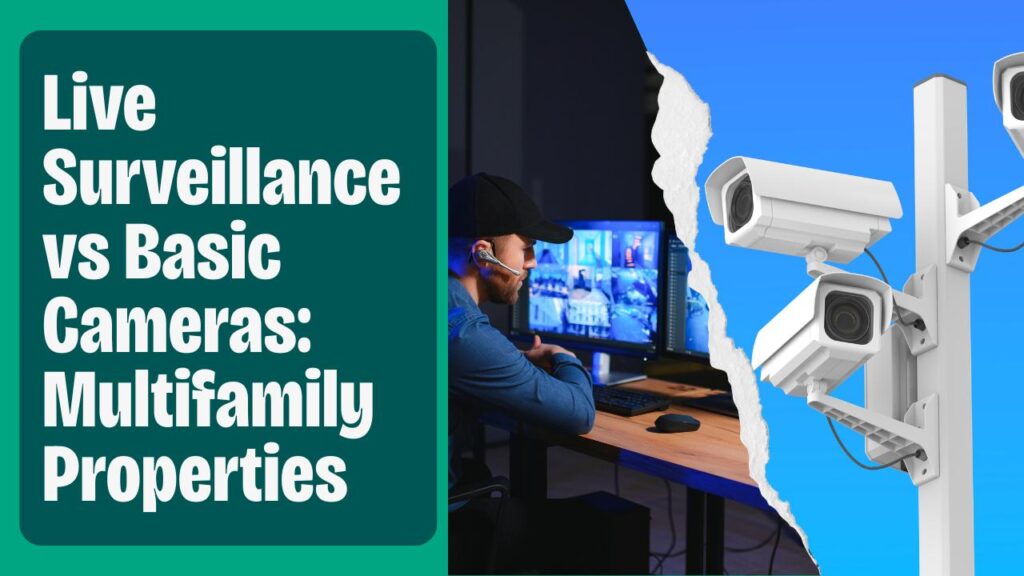
Multifamily residences are used by several people, they provide special security challenges. This usually calls for the installation of different security systems, including security cameras, live surveillance cameras, CCTV cameras, and surveillance cameras. The different security systems are made for different reasons and have unique benefits. This article would like to inform the reader about the many kinds of security systems and provide a comparison of them in relation to multifamily homes, especially focusing on live surveillance vs basic security cameras and how pricing and usage differ. Here are the topics to be discussed: Difference Between CCTV and Surveillance Cameras Multifamily security is a challenging issue that requires careful planning and the use of suitable technologies to guarantee everyone’s safety. The most common method for monitoring activity in residential building areas with high traffic has been closed-circuit television, or CCTV. CCTV uses cameras that are linked to a network or central recording device to provide a live feed that is only available to specific people. As the name suggests, surveillance cameras have the same appearance and feel as CCTV models, but their main focus is on ongoing monitoring, using advanced analytics to quickly identify unusual activity. Understanding the difference between CCTV and surveillance camera systems is important because choosing the right technology directly affects how well incidents are prevented and how large areas are covered using alarms, access control, and monitoring tools. It is directly tied to the possibility of security systems preventing incidents and covering wide regions. What Are Surveillance Cameras Surveillance cameras are designed to monitor activity in specific locations for a longer period of time, so they may be in operation at all times, seven days a week. Unlike basic recording devices, cameras are able to view locations in real time and can be connected with advanced security systems to identify and track unusual activity. They are frequently found in public spaces, commercial buildings, and large multifamily properties where a continuous presence may be necessary to help prevent theft, damage, or unwanted access. This could include surveillance camera features like motion tracking, facial recognition, and remote access. Which allow property managers to examine video, monitor resident safety, and quickly address any worries about possible problems. These cameras increase operational awareness in multifamily buildings without compromising the requirement for a noticeable security presence that prevents criminal activity. Is a Surveillance Camera the Same as CCTV A common question is “is surveillance camera the same as CCTV”, and the answer is no. While the terms “CCTV” and “surveillance cameras” are sometimes used together, they have different meanings. CCTV is a closed-loop system that primarily records and stores video by feeding it to a specific number of monitors or recording devices without any external access. Although they can use CCTV principles, surveillance cameras are frequently improved with network connectivity, cloud storage, and advanced monitoring software that allows for remote viewing, motion alerts, and analytical insights. Modern surveillance systems allow property managers to actively track activity and detect security threats. While maintaining oversight of multiple common areas without requiring their physical presence. Relying solely on CCTV in multifamily properties may limit responsiveness because it highlights post-event review. What are Basic Security Cameras These recording devices, often known as CCTV (Closed-Circuit Television) cameras, are made to keep an eye on actions that are triggered by things like motion and sound. They are wireless, very simple to install, and accessible from a distance via smartphone apps. In multi-family homes, this kind of technology can be used to keep an eye on activities in less dangerous settings. These devices can do almost any surveillance function, including cloud storage, two-way audio communication, night vision, and push notifications for alerts when motion activity is detected. They are an affordable monitoring tool that can be used to keep an eye on office spaces, leasing offices, storage rooms, and other areas of an apartment complex where recordable activities are important to improving residential safety, but continuous monitoring may not be a top concern. What is Live Surveillance Live monitoring, which combines real-time human observation with cameras, is said to be the most advanced type of proactive monitoring. Unlike automated systems, live monitoring enables qualified staff to keep an eye on video feeds around-the-clock and respond quickly to suspicious aspects before a crime is committed or criminal activity takes place. When necessary, live monitoring may involve direct notifications to security staff, voice communication with intruders, and immediate notification of nearby law enforcement agencies. Apart from enhanced physical security, the mere knowledge that live monitoring is available boosts residents’ confidence in the continuous management of their safety, which lowers the risk for property managers in terms of possible legal consequences. Live Surveillance vs Basic Security Cameras The amount of human contact and response is the main difference between basic security cameras and live surveillance. While simple security cameras rely on notifications, surveillance footage is reviewed after the incident has occurred. Live surveillance allows specialists to actively watch live feeds. It detects potential threats on an ongoing basis and takes proactive measures. Simple security cameras are better suited for relatively low-risk interior areas, administrative offices, or temporary surveillance. Live surveillance can be successfully applied in high-traffic zones, entrances, parking lots, and external regions for multi-family homes. Understanding this, property managers can make good use of both systems in tandem, guaranteeing suitable safety allocations within specified financial limitations. Let’s take a couple of steps to identify the differences between surveillance and security cameras: 1. Monitoring and Response Differences One feature that differentiates live surveillance from standard CCTV systems is surveillance monitoring. For example, in live monitoring, CCTV footage is carefully reviewed by human operators who make decisions based on both deployed security measures and behavior seen in the footage. As a result, most CCTV systems do not require human making choices. An automated detection system notifies the user if motion is detected or if the specified requirement has been fulfilled. This can be