What is VoIP and Why Do You Need It for Business
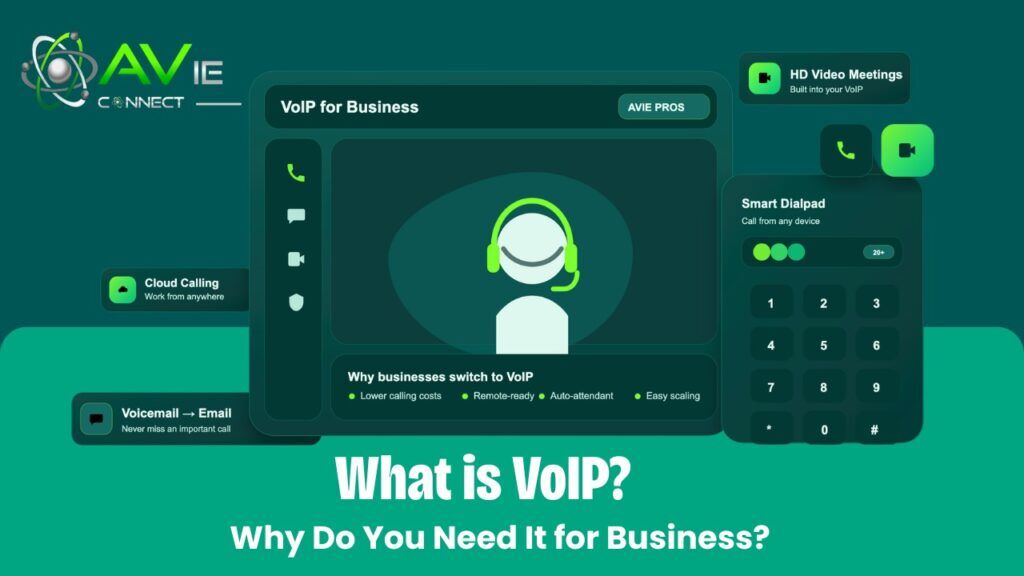
VoIP is a technology for communication that has completely changed how businesses connect with their customers and with one another. Although the majority of beginners are familiar with the word VoIP, they may not fully understand its meaning or the reasons why businesses are slowly moving from older techniques to this one. VoIP, which stands for voice over Internet Protocol, is a technology that allows phone calls to be made over the internet rather than fixed lines. Because of this technology, communication has changed in a way that is more affordable, quicker, and adaptable. Let’s explore it: What Does VoIP Mean VoIP is a technology or method of making calls over the internet instead of using standard copper connections. VoIP is a very simple idea. Your voice is actually converted into binary data and sent across the internet like text. The best part about VoIP is that it allows calling from any location in the world with internet availability. Because it does not require a local phone exchange to browse or connect to the internet. VoIP technology’s ability to offer businesses and entrepreneurs an extremely affordable means of communication with remote workers or other regional or worldwide branches of a company is one of its main benefits. VoIP technology’s main advantage is its capacity to offer an extremely economical means of communication. Why VoIP is Becoming Popular Among Businesses Flexible, affordable, and quick communication methods are highly in demand in today’s world. VoIP meets every requirement in this field, which explains why the technology is so widely used. Today’s businesses don’t want to rely on internal communications. This technology has been popular since it makes it possible for people to keep getting business calls, whether they are at home, traveling, or moving to another workplace. Apart from this, the advanced features of this technology are the reason why people are using it. This technology, which was highly costly to purchase, offers features including call waiting, voice email delivery, and video calls. The technology’s ability to connect with other business applications, such as business communication support tools, is another reason why companies have adopted it. With increased global internet connectivity, this technology has grown into a more effective commercial communication tool. How VoIP Technology Actually Works Understanding how the technology functions can even help beginners feel more confident when using the system. The microphone on your phone, computer, or VoIP device records your voice when you use the technology to make a call. After that, your speech is translated into digital language and divided into data packets that are sent via your internet connection to the person you wish to interact with. When the internet connection is smooth and effortless. The packets are reassembled at the other end. The voice is instantly transformed back into sound. This process takes only a few seconds. While it’s complex processes that take place after you start conversations that feel like regular phone calls to the user, the technology uses specialized software that manages the calls, the quality, and the privacy of the discussions to make it truly efficient and foolproof. Requirements for VoIP Every system has some rules and requirements before delving into it. Let’s get into: 1. Choose the Right VoIP Provider Selecting the best VoIP service provider is important for success. Businesses should choose service providers with reasonable pricing policies, excellent assistance, and a high level of dependability. In order to prevent problems, functionalities should be in good connection with business requirements. Scalability is a necessity for future growth. High safety features should be present in-service providers to help with administration. Businesses allow for quality with the use of reviews and presentations. Those who are new to the business should choose those with user-friendly features that make installation simple. It creates the ideal communication partner rather than only a service provider, guaranteeing that VoIP’s advantages reach the business easily. 2. Internet Requirements for VoIP VoIP requires a dependable internet connection, but it is not too demanding. For a VoIP conversation, a standard business internet connection is sufficient. Compared to downloading files and videos, voice communication consumes far fewer internet resources. Multiple VoIP conversations can take place at the same time with an average internet connection. For maximum functionality, bigger companies might choose faster plans. Although current Wi-Fi standards are enough, wired communications are more reliable than wireless communications. Despite numerous activities taking place on the internet, business organizations can set up quality of service settings to prioritize VoIP communications for optimal operation. Difference Between VoIP and Traditional Phone Systems Traditional phone networks depend on the infrastructure and landlines that have been in use for many years. Modern phone networks require certain fixed locations and wired phone exchanges. Long-distance and international calling on traditional phone networks is also quite expensive. But VoIP offers much lower or free rates. For startups in particular, setting up traditional phone networks is an expensive and time-consuming procedure. Because new lines must be physically added to the network by making changes to the infrastructure, traditional phone networks are difficult to scale. However, VoIP is very easy to grow or shrink without the need for wiring, which is one of the reasons why companies from traditional phone networks are using VoIP solutions. Benefits of VoIP Regarding Business Activities It has useful advantages that can make the system strong. The best part is that nothing is difficult to adapt to. Let’s understand how meaningful impacts it has: 1. Cost Benefits of Using VoIP for Business One of the reasons why more companies are using VoIP to reduce expenses is cost savings. Both installation and call costs are necessary for a typical telephone network. Since VoIP depends on standard Internet connections, the majority of these expenses are eliminated. VoIP installation simply requires a single installation fee. Long-distance and international calls are far less expensive using VoIP, which is advantageous for companies that deal with foreign customers. The majority of service providers enable users to