Phone Battery Swell: Causes, Risks & How to Fix It Safely
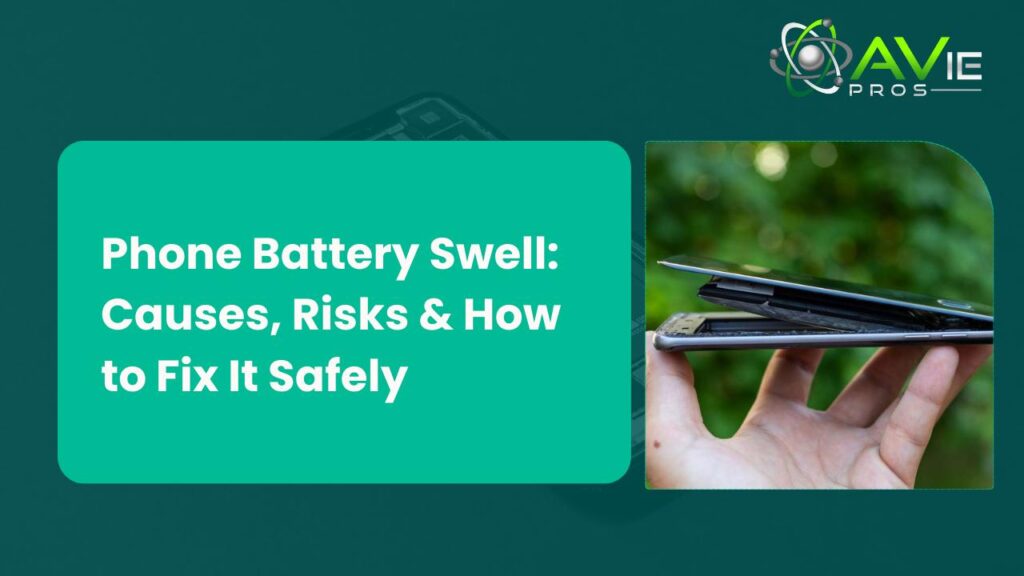
A swollen phone battery is one of the scariest situations a smartphone user may face. Many people have no idea how dangerous this issue actually is because it starts slowly and silently. Your phone may first feel slightly thicker than normal. Then, you could notice the back cover lifting a little. The screen might get flat or slightly lifted. In this detailed blog, we will explore why phone batteries swell, what risks they bring, how to detect the problem, what not to do, and how you can fix the issue safely. Let’s explore it: Understanding Why Phone Batteries Swell Lithium-ion or lithium-polymer batteries are found in the majority of modern mobile phones. These batteries are strong, small, and rechargeable, but they also need to be handled quite carefully. Gases can collect in these batteries if something goes wrong. The battery swells as a result of the gas buildup. Problems with chemical reactions within the battery cause this kind of swelling. Once these reactions are unbalanced, the chemical layers begin to break down, resulting in gases that cannot escape from the sealed battery pack. The visible shape is the result of the battery expanding from the inside out due to this pressure. Batteries frequently swell as a result of aging, poor manufacturing, overcharging, intense heat, physical damage, or poor chargers. Swelling can start very slowly, but once it starts, it never quits. Whatever you attempt, the battery never returns to its normal size. Understanding the causes is important since it enables you to identify the possible cause of the issue. Causes of Battery Swelling There are a few causes mentioned below of battery swelling. Let’s get into the details to acknowledge: 1. Battery Age One of the most common reasons for battery swelling is getting old. In the end, each battery can only be charged and used a specific number of times before it gets weak because all batteries have a certain number of charge cycles. As the battery ages, its inside chemical structure breaks down little by little. This breakdown, in turn, influences the way the battery carries out energy storage and release. The battery gets unstable and easily releases gas when it is charged. Normal use even adds to swelling when the battery lasts longer than planned. In fact, a lot of users have observed that after two or three years of consistent use, older phones start showing battery problems. That’s actually more common, and most of the time, the swelling begins because the battery has just reached the end of its useful life. 2. Extreme Heat Heat is one of a lithium-ion battery’s main enemies. The battery is forced to work harder when your phone heats up, which causes the chemistry inside the battery to become unstable. The battery could die much more quickly as a result of this instability. Many reasons, including leaving your phone in a car at high temperatures, using it while it is charging, playing games for extended periods of time, putting it under a pillow, or exposing it to direct sunlight, can cause heat. The device may generate heat even if the processor is overworked by heavy apps. 3. Overcharging and Poor Charging Habits Many people think they can leave their phone charging overnight or keep it plugged in all day without causing any harm, but this habit slowly damages the battery. Modern phones do have security features, of course, but they are unable to completely prevent the long-term effects of overcharging. Your phone’s battery is forced to stay in this extremely stressful state if it continuously runs at 100% for extended periods of time. Lithium-ion batteries don’t like to be fully charged for lengthy periods of time. Over time, this stress leads to a chemical breakdown inside the battery cells. Using cheap chargers, broken cables, or low-quality third-party adapters also harms its inner structure. Unstable current from a defective charger may cause the battery to overheat or suffer internal damage. The risk of swelling is increased by each of these conditions. 4. Manufacturing Faults Batteries do sometimes swell as a result of manufacturing faults. The materials used to make the battery might have small defects or dirt. These are typically undetected in the early stages and cannot be seen from the outside. However, during months or years of use of the phone, the built-in problem starts increasing gradually, creating chemical instability eventually. As a result, the battery eventually swells and produces gases. For this reason, some new phones also encounter cases of swollen batteries even when the device isn’t too old. If the phone is still under warranty, many companies offer replacements for this reason. 5. Physical Damage The battery within your phone might be harmed by dropping it, damaging it, or applying it to force. Sometimes, even though the phone may seem absolutely fine from the outside, the battery may develop cracks or pressure zones that cause a decline in the interior chemical structure. These interior layers of the battery are unstable when broken and activate chemical reactions, releasing gas. This gas gathers inside the sealed battery, which leads to its expansion. Sometimes physical trauma causes this swelling to occur quickly, and you can see the effects right away. In other cases, this swelling may start very slowly over time. Either way, physical damage remains one of the biggest reasons for battery problems. 6. Environmental Impact Batteries contain chemicals that can be toxic if not disposed of safely. When people throw batteries in regular garbage, these chemicals can leak into the ground and mix with water sources. This pollution affects plants, animals, and even humans. Recycling centers carefully handle damaged batteries so they do not cause harm. By disposing of swollen batteries in the right way, you are helping protect the environment. Hidden Risks of a Swollen Battery More than just an issue, a swollen battery provides a major risk to public safety and must be treated right away. Your phone’s internal parts may