Common Security Risks in a Residential Community
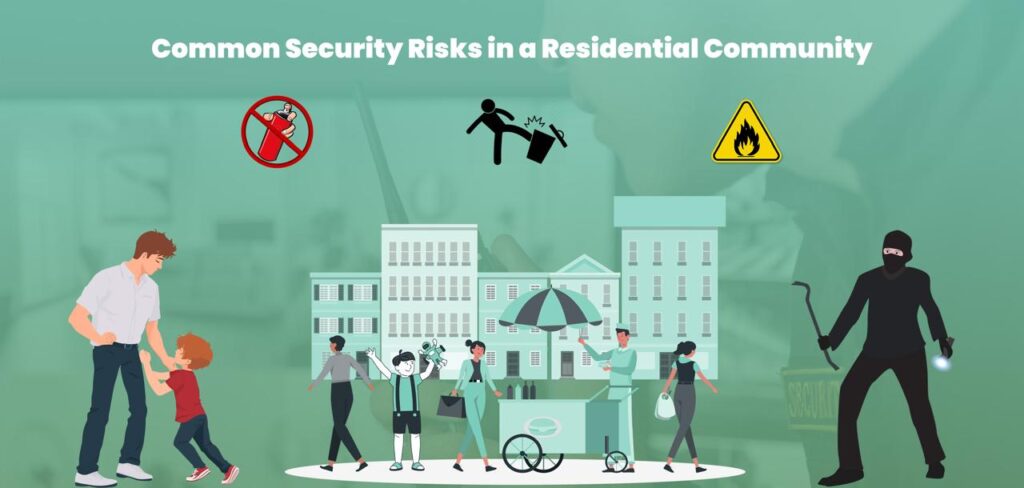
In this article, we will explore the most common security risks in a residential community. This guide is not just for beginners, even people who have much experience can protect their home and family with the security tips that we are going to discuss. We will use simple and easy-to-read language so everyone can understand and take action. We claim that by the end of this card, you should have a clear picture of what you need to do and what steps are required to make your community safer. Let’s get into: List of Security Risks in a Residential Community with Solutions Let’s have a look at acknowledging what threats people face and how to overcome them. Let’s dive into details: 1. Burglary Home burglary risks in Residential communities are the most common security risk in every residential area. When someone breaks a window or door of a house to take assets, it’s called a burglary. Most burglars target homes that are simple to enter, look empty, have weak windows or doors, or lack obvious security equipment. They normally strike quickly and silently, usually at night or when people are at work. Believing that their neighborhood is too peaceful or pleasant for such activities is one of the biggest mistakes made by homeowners. Unfortunately, if there is a chance, crime may occur even in places that appear to be safe. To reduce the risk of burglary, we need to plan something that can make another person feel wrong. Let me give you an example, when you are not at home, you can take some actions to play a trick on the thief. You can use timers for lights and leave your radio on to realize that someone is in the home who is doing such activities. The best tip is always to lock your doors and windows, even if you are just stepping out for a few minutes. Take care of your basement doors and windows, as many criminals break in through basement windows to enter your home. Avoid sharing your travelling plans on social media, and don’t post anything that can alert others that your house is empty. 2. Package Theft It is another common risk that people face nowadays. Those people who love to purchase a lot of things online have become targets for thieves. If someone leaves a delivery package at your door stuff it can be stolen in a few seconds. This type of crime is growing day by day, and even in neighborhood societies, including big cities, everyone encounters this. The best way to prevent your packages from the theft is that you need to deliver a secure location to the delivery person as a locker or a trusted neighbor’s house. If it’s not possible, then try to reschedule your delivery and receive it only when you are available at your home. In this crime, installing a doorbell camera can assist you like a friend, so you can record anyone who comes to your door. 3. Vandalism Vandalism is another serious issue that can affect your residential community. It includes damages or breakage of your property likewise applying spray on your walls to destroy the paint, breaking windows, and slashing car tires. Vandalism is not just stealing your stuff, it also creates fear and costs money to lose or fix something. Most of the crimes happened at night because people get tired from their busy schedule and plan their sleep hours to rest. Poor lighting and hidden corners seem easy targets for the criminals. Neighborhoods should prioritize well outside lighting to reduce vandalism. Parking lots, building entrances, and walkways should all be lighted by lights. Particularly useful are motion-sensitive lights, which turn on as soon as someone approaches, potentially alarming or discouraging thieves. Another benefit of trimming trees and bushes is that it removes hiding spots. Vandals are discouraged by a neighborhood that is clean and well-maintained because it gives the idea that residents treat their homes seriously. 4. Suspicious Strangers Another overlooked risk is the presence of some strangers or suspicious people around you. In communities, we see a rush of people visiting there, like delivery workers or guests of residents. It’s a difficult task to look for every person’s details. So, it’s important to be aware of the people who seem like strangers. Check if someone is walking behind you, has no clear purpose, and is looking hair, and they’re just avoiding you, it’s a red alarm. Keeping an eye is important, if someone is taking pictures of your home or checking the doors. In many cases, these are warning signs that people missed just to avoid them. Neighborhood awareness becomes essential to acknowledge. People ignore alarming signs just to not look rude or judgmental. For security, you can call the local police to report the person, it’s alright. Now use neighborhood programs where they learn information about suspicious activities. By learning and watching, you can help yourself with awareness and improve your safety. 5. Poor Access Control Another major safety issue in certain residential communities is insufficient access control. Unauthorized access in housing societies is one of the biggest threats to residents’ safety. Anyone can enter the building at this point without having to check in or show identification. Gated communities may have guards, but sometimes the gates are left open or the guards may not be on duty. In different places, there might not be a gate at all, allowing unauthorized people to enter and go without restriction. One of the best ways to improve security is to restrict access. Gates must always be kept closed and locked in neighborhoods. A resident must announce or invite guests to sign in. If they are available, guards should be alert and trained. Controlling who enters the zone can also be aided by new technology, such as phone applications, key cards, and intercoms. Residents may help even in gated communities by reporting unauthorized vehicles or people entering